School supplies for fine motor skills: what actually helps
Some children pick up a crayon and start drawing without a second thought. Others struggle with it, and the struggle is not really about the crayon. It is about the skill underneath it, the small, precise hand movements that writing, cutting, and coloring all depend on. When a tool is uncomfortable to hold or hard to control, a child gets less practice with it, not more, because nobody keeps doing something that feels like failing.
The short version: Fine motor skills grow through practice. The right tool will not fix a fine motor delay on its own, but the wrong tool can quietly get in the way of practice. Matching crayons, pencils, scissors, and paintbrushes to a child’s current hand strength and grip makes daily practice more comfortable, which is what actually builds the skill over time.
I spent 25 years in the stationery industry, working closely with the tools this article covers. One important note before we start: this is not occupational therapy advice, and I am not a therapist. If your child has a diagnosed fine motor delay or a specific recommendation from a therapist or teacher, follow that guidance first. What follows is practical, product-level information a parent can act on, not a treatment plan.
Why fine motor skills matter more than they seem to
Fine motor skills are the small, coordinated movements of the hands and fingers, the ones behind holding a pencil, buttoning a shirt, or cutting along a line. They matter for a simple reason: an enormous share of the elementary school day depends on them.
One classroom observation study published in the American Journal of Occupational Therapy put the figure between 37 and 60 percent of the school day, and found that the share climbs as children move up through the grades, from around 37 percent in kindergarten to about 60 percent in fourth grade. The researchers watched only three classrooms, so the exact numbers are not the point. The scale is: for a young student, a large part of every school day runs through the hands.
When this area lags, the effects rarely stay contained to art class. When writing itself requires so much effort, children have less attention left for spelling, sentence building, or expressing their ideas, even when they know the material well. The OT Toolbox, run by a practicing school-based occupational therapist, covers this connection between fine motor demands and classroom performance in more depth.

None of this means every child who dislikes coloring has a delay. Skill develops at different speeds, and plenty of children simply need more time. But if practice is consistently met with frustration rather than gradual improvement, or if a teacher or caregiver has raised a concern, that is worth a conversation with your child’s teacher or a pediatric occupational therapist, not a worksheet from a blog.
Crayons and first drawing tools
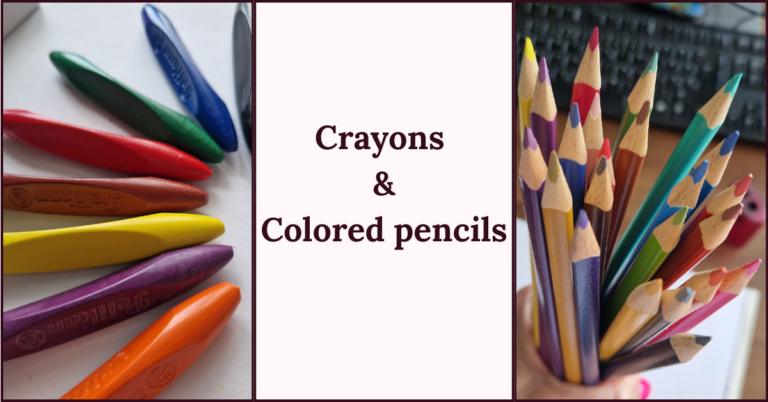
The earliest drawing tools should ask for very little precision, because fine motor skills are barely there yet. A palm-grip crayon, shaped like a rounded ball or an egg, is built to be held in a full fist, which is exactly how the youngest children naturally grasp things. There is nothing to master here except color and motion, and that is the point.
The next stage is the triangular jumbo crayon, shaped with three flat sides instead of a round barrel. The triangular shape gives the fingers a more natural resting position toward the same tripod grip used later for a pencil, so a child can transition from a fist grip toward a more precise one without being told how. Crayola’s My First Triangular Crayons are a widely available example of this shape, and their Washable Triangular Grip Crayons continue the same idea for slightly older toddlers and preschoolers.
A crayon’s shape guides the hand more than its thickness does. A palm-grip crayon supports the youngest children’s natural whole-fist hold, while a triangular jumbo crayon later encourages the tripod grip they will need for a pencil. A very thick barrel, even in a triangular shape, can still leave a child gripping it with their whole hand long after they are ready to hold it with just three fingers.
Pencil grips
A pencil grip is a small, soft attachment that slides onto a standard pencil, crayon, or pen and shapes where the fingers land. For a child who consistently reverts to a fisted or awkward grasp once they move to a regular pencil, a grip can bridge the gap between the crayon stage and confident pencil use.
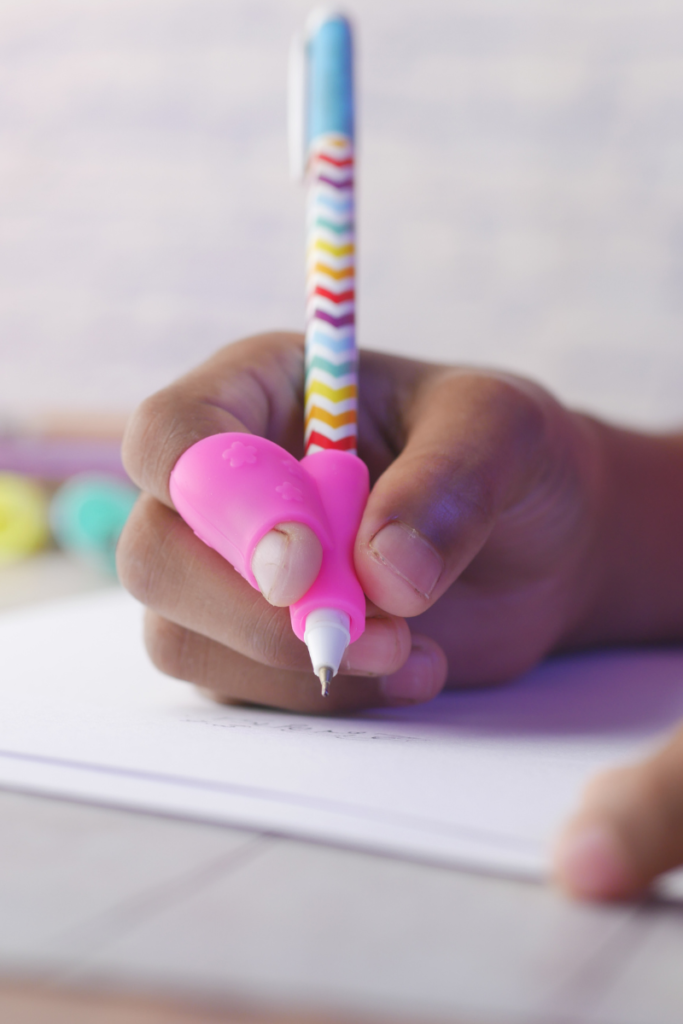
Pencil grips are not all designed for the same purpose. Some have molded finger pockets that clearly show where each finger belongs, while others simply add cushioning and make a pencil more comfortable to hold. Choosing the right style matters more than choosing the most popular one. The Pencil Grip brand is the widely stocked, molded-pocket option, while ARK’s Butter Grip takes a different approach, a plain round grip the fingers wrap around, designed by an occupational therapist to open up the space between thumb and index finger rather than to dictate exact finger placement.
A pencil grip can make a writing tool easier to hold, but fine motor skills come from regular drawing and writing practice, not from the grip itself.
Colored pencils
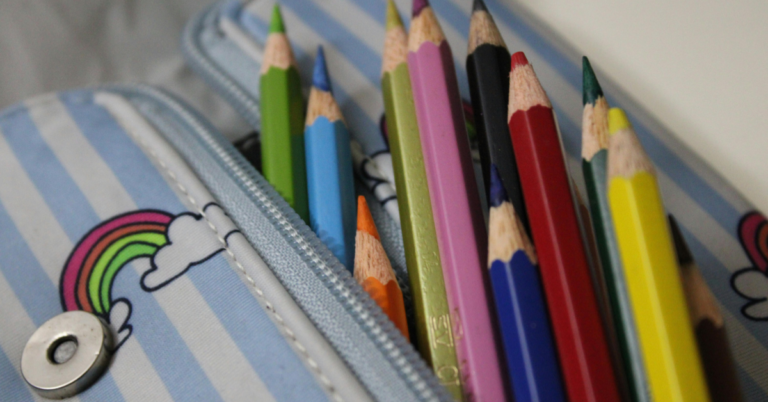
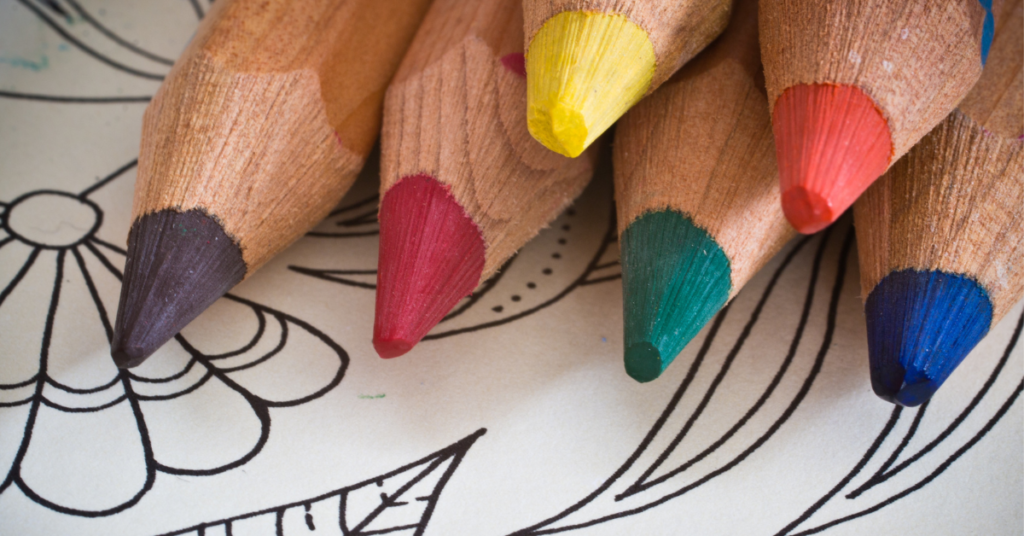
Jumbo colored pencils do not all look the same. Some are simply thicker versions of a standard pencil, while others are noticeably shorter as well, and that shorter version is a useful step between crayons and a regular pencil. A full-length pencil can feel unwieldy for a child whose grip is still developing, while a shorter, chunkier one stays balanced without extra effort.
This size works well for a child who tires quickly during coloring, often presses too hard, or loses interest partway through because the standard pencil feels like too much tool for the task. A shorter, comfortably weighted colored pencil supports longer, calmer coloring sessions simply by asking less of the hand holding it, which means more time actually practicing the grip instead of fighting the tool.
Once a child manages a standard #2 pencil confidently for schoolwork, most manage standard colored pencils just as well. My guide to crayons and colored pencils for kids walks through this progression stage by stage in more detail.
Markers
Markers ask for less physical effort than crayons or pencils, since color appears with barely any pressure at all. For a child whose hand tires quickly or who presses too hard out of habit, that lower effort threshold means a coloring page finishes before hand fatigue becomes a problem, which matters more for motivation than it might seem.
The tradeoff is durability and mess: markers dry out if left uncapped, and some bleed through paper. For daily practice sessions rather than finished artwork, this trade is usually worth it. A marker that finishes the page is more useful right now than a crayon that gets abandoned halfway through.
Paint and brushes
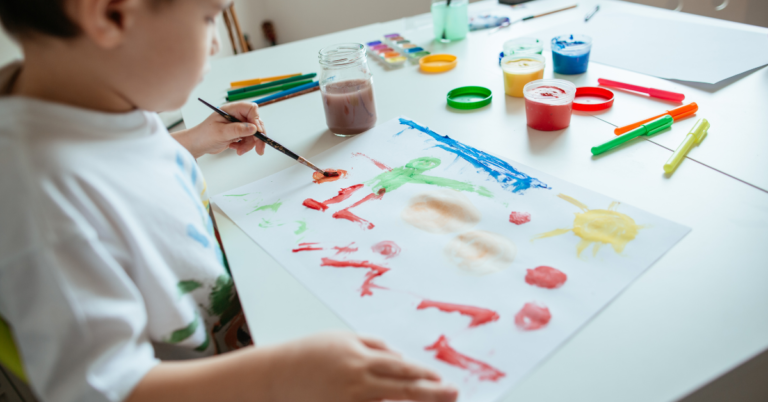
Painting asks for something different than drawing does: less precision, more freedom, while still building hand-eye coordination through broader, lower-stakes movements. Paint is naturally more forgiving than pencils or crayons. Broad brushstrokes still produce colorful results even without precise control, which matters for a child who finds pencils and crayons frustrating.
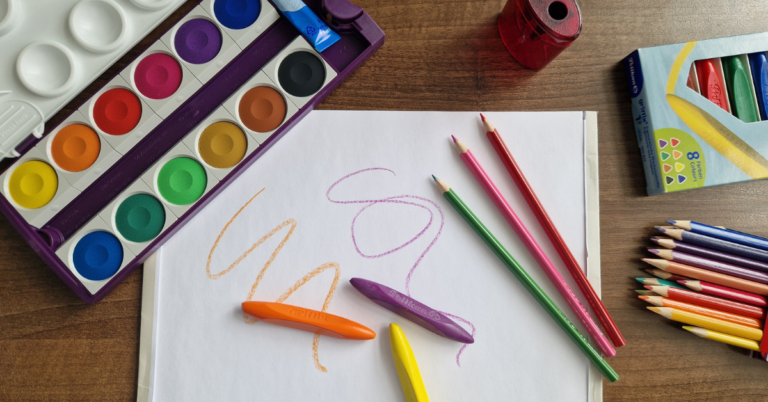
A palm-grip paintbrush, thick-handled and easy to hold in a fist, is a natural starting point, for the same reason a palm-grip crayon works early on: nothing to master except moving color onto paper. From there, look for a watercolor set with large, easy-to-reach paint circles rather than small pans, since a child with a developing grip loses far less time and interest hunting for color in wells that are too small or too close together.
Scissors
Cutting is one of the few school activities that requires both hands to work together, one to cut and one to hold the paper steady, plus the hand strength to open and close a blade repeatedly. It places different demands on children’s hands than writing does.
Spring-assisted scissors, which open automatically after each cut, remove one part of that demand. The child only has to squeeze, not squeeze and then manually reopen the blades, which matters for a child whose hand fatigues quickly. Fiskars offers several spring-assisted models, including its Easy Action scissors, while many of its children’s scissors also feature SoftGrip handles for added comfort.
One more thing worth checking before you buy: if your child is left-handed, buy scissors made for left hands rather than a pair labeled ambidextrous. The blades on right-handed scissors are set so that a right hand’s natural squeeze pushes them together, and a left hand pushes them apart instead, so the paper bends rather than cuts. A child working twice as hard for a worse result will reasonably conclude that cutting is not for them. My guide to school supplies for left-handed kids covers this and the other supplies where handedness changes what to buy.
Erasers
Using an eraser well takes the same controlled, steady hand movements as writing itself, just in reverse. A good eraser should remove graphite cleanly without tearing the paper or leaving heavy smudges behind. Edges do more of that work than most parents expect: a sharp corner handles small corrections like a single letter or a stray line, while a broad flat surface clears larger areas in fewer passes.
How much pressure an eraser needs matters just as much for a child with limited hand strength. The Paper Mate Pink Pearl is the eraser most American school lists still name, and it is soft and gentle on paper, but classroom testing by WeAreTeachers found it takes more rubbing to clear a line completely than several alternatives. A white polymer block like the Pentel Hi-Polymer lifts graphite with far less pressure, which is the difference between a correction a child can make and one that ends in a torn page. If your child presses hard, erases the same spot over and over, or tears the paper regularly, the eraser is worth changing before anything else.
Common mistakes parents make
Jumping straight to standard tools because of age. A child’s actual grip and hand strength matter more than the number on their birthday. A 6 year old still working on a mature grasp benefits more from a jumbo colored pencil than from a full-size one bought because “6 year olds use regular pencils.”
Judging a tool by size alone. Bigger is not a universal fix, and past a certain point, an oversized barrel can encourage the same whole-fist grip a family is trying to move away from. Shape and grip position matter as much as size, sometimes more.
Buying one pencil grip and assuming it will work. Grips are not one-size-fits-all. A child who needs a clear, structured finger position will not benefit much from a soft, unstructured grip, and the reverse is just as true. If the first one does not help within a few weeks of regular use, a different style is worth trying before giving up on grips altogether.
Treating every dropped tool or short attention span as a delay. Skill develops at different speeds in different children, and a rough week with scissors is not automatically a sign of a lasting problem. Consistent, ongoing frustration across weeks or months is the signal worth acting on, not a single hard afternoon.
What all of this comes down to
Fine motor skills are built by practice, not by purchases. What the right tool does is remove the friction that makes a child stop practicing: a crayon that fits the hand, scissors that reopen themselves, an eraser that does not tear the page. None of it replaces time, and none of it replaces professional guidance where a real delay is involved. But a child who is not fighting the tool gets more practice, and more practice is what actually moves fine motor skills forward.
Frequently asked questions
How do I know if my child has a fine motor delay?
A single frustrating day with scissors or a crayon is normal. A pattern of ongoing difficulty, avoidance of drawing or writing tasks, or a teacher raising a concern is worth discussing with your child’s pediatrician or teacher, who can refer you to an occupational therapist for an evaluation if needed.
What is the best first crayon for a toddler?
A palm-grip crayon, shaped to be held in a full fist, is the easiest starting point, since it asks nothing of the fingers beyond making a mark. A triangular jumbo crayon is usually the next step once a toddler moves past pure fist grasping.
Do pencil grips actually work?
For many children, yes, especially when paired with regular, low-pressure practice. A grip makes the pencil easier to hold, but it works best alongside consistent practice, not instead of it.
Is a thicker crayon or pencil always better for small hands?
Not automatically. Shape matters as much as thickness. A triangular shape guiding the fingers toward a tripod grip helps more than raw size, and an overly thick barrel can sometimes encourage a whole-fist grip instead of a more precise one.
What scissors are best for a child who struggles to cut?
Spring-assisted scissors, which reopen automatically after each cut, reduce the physical demand of repeated cutting. Soft, cushioned handles also help reduce hand fatigue during longer cutting tasks. If your child is left-handed, choose scissors made specifically for left hands rather than an ambidextrous pair.
Should my child use markers instead of crayons if their hand gets tired?
Markers need less pressure to produce color, which can help a child finish a page before fatigue or frustration sets in. They are a reasonable substitute for practice sessions, though crayons and pencils remain necessary for building the grip strength school tasks eventually require.
My child is behind on handwriting. Should I buy special school supplies or ask for occupational therapy?
Both can help, but they are not interchangeable. Supportive tools make daily practice more comfortable, while occupational therapy addresses the underlying skill directly. If handwriting difficulty is significant or ongoing, talk to your child’s teacher about a referral rather than relying on tools alone.
At what age should a child stop using a pencil grip?
There is no fixed age. Some children stop needing a grip once their natural grasp matures, others use one comfortably through elementary school. The right time to stop is when the child’s grip is stable and functional without it, not a specific birthday.
Are expensive fine motor tools worth the cost?
Not necessarily. Many of the most effective options, jumbo crayons, basic pencil grips, spring-assisted scissors, are inexpensive and widely available. My guide to budget school supplies covers where spending more genuinely pays off and where it does not.
Can occupational therapy activities be done at home without a therapist?
Simple activities like playdough, tearing paper, or lacing cards support fine motor development generally, but they are not a substitute for a professional evaluation if a real delay is suspected. Home practice works best alongside professional guidance, not instead of it.
Where should a diagnosed fine motor delay be addressed first, at home or at school?
Neither instead of the other. A child with a diagnosed delay usually benefits from consistency across both settings, so loop in your child’s teacher and any therapist involved so the same tools and expectations carry over between home and the classroom.