How to choose a kids backpack for school: what most parents don’t look at
Most parents choose a school backpack based on what their child points at in the store. The color, the character on the front, the zipper pull that lights up. These things matter to children, and that is completely understandable. But the features that actually determine whether a backpack is comfortable, durable, and safe to carry every day are almost never on the front of the bag.
This guide covers what to actually look for when buying a kids backpack for school, and a few things that are worth skipping. For a broader overview of what to buy for the school year, my complete school supplies guide covers everything from notebooks to pencils.
The back panel: padding and ventilation matter equally
The back panel is the part of the backpack that sits against your child’s back for the entire school day. In a bag without padding, the contents press directly against the spine and shoulder blades. Books have corners. Water bottles are hard. A padded back panel puts a layer of cushioning between the bag’s contents and your child’s back.
But padding alone is not enough. A dense, unventilated back panel traps heat and moisture, which means your child arrives at school with a sweaty back on warm days. Good school backpacks have a back panel that is both padded and structured to allow airflow, either through channels in the foam or a raised mesh design that keeps the bag slightly away from the back. Look for both features together, not just one.
Fashion brand backpacks are not automatically a bad choice, but many have minimal or no back padding because their design prioritizes appearance over function. If you are considering a fashion brand bag, check the back panel before buying. A bag with no padding at all is not a good choice for a child who regularly carries books, folders, and school supplies.
Shoulder straps: padded, wide, and adjustable
The shoulder straps carry most of the bag’s weight. Narrow, unpadded straps concentrate that weight on a small area of each shoulder, which becomes uncomfortable quickly and can leave marks on skin after a long school day.
Look for straps that are wide, well-padded, and comfortable across the shoulder. The padding should feel substantial when you press it, not just a thin layer of foam under fabric.
Adjustability is equally important, and this is something many parents overlook at the time of purchase. A child wears very different clothing in September and January. A t-shirt and a winter coat take up very different amounts of space on the shoulders and back, which means the same strap setting that worked in warm weather will be too loose or too tight once heavier clothing arrives. Straps that adjust easily, ideally with one hand, mean the bag can be properly fitted to whatever your child is wearing that day.
The character backpack problem
Many children go through a phase of wanting a backpack featuring their favorite cartoon or movie character. This is one of the most common backpack conversations parents have, and it is worth thinking through before you are standing in the store.
A character backpack that your child loves in September may be deeply embarrassing to them by December. Children’s allegiances to specific characters shift quickly, and a bag they begged for at the start of the school year can become something they refuse to carry within a few months. A backpack your child no longer wants to carry halfway through the year is not a good investment.
If your child is set on a character bag, it is worth having an honest conversation about whether this is a character they have loved for a long time or one they have recently discovered. A bag with a more timeless design, a color your child loves, or a subtle pattern they chose themselves tends to have a much longer useful life than one tied to a specific character or franchise.
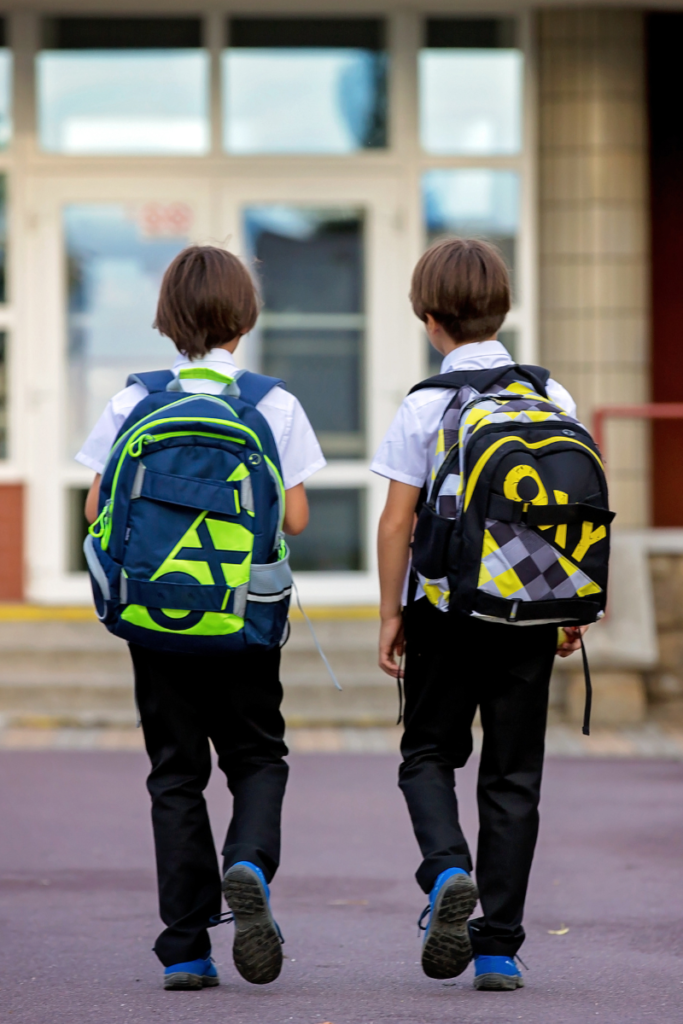
Compartments: fewer is better for younger children
A backpack with many pockets and compartments looks organized and practical. For an adult, it might be. For a first or second grader, it is often a problem.
Young children do not yet have the organizational habits to manage multiple compartments consistently. A bag with too many sections means things end up in the wrong pocket, nothing can be found quickly, and the child spends time rummaging instead of getting ready. The result is frustration for everyone.
For elementary school children, the ideal configuration is simple. One large main compartment for textbooks and notebooks. One medium compartment for a lunchbox or snack, kept separate from school supplies. One front organizer pocket with a few sections for keys, small items, and a pencil or two. Two side pockets sized to fit a water bottle. That is all that is needed, and it is all most children can reliably manage.
Construction details worth checking
A few smaller features make a real difference to how long a backpack lasts and how practical it is to use every day.
A reinforced base is worth looking for. The bottom of a school backpack takes the most wear, getting put down on floors, pavements, and wet ground repeatedly. A reinforced base protects the bag from abrasion and extends its life significantly. Some bags also have small rubber feet on the base, which keep the bag off dirty or wet surfaces when set down — a nice bonus if you can find it, but not essential.
A grab handle on the top of the bag is useful more often than it sounds. Teachers ask children to move bags, lockers require lifting, and parents end up carrying the bag at some point during every school year. A sturdy handle makes all of this easier.
A small loop or hook inside the bag for keys is a minor feature that prevents a lot of lost key situations over the course of a school year.
Reflective elements: not optional
Children walk to school in all weather and all seasons. In autumn and winter, that often means low light conditions in the morning or afternoon. Reflective elements on the front, sides, and shoulder straps of a backpack make a child significantly more visible to drivers in low light.
Many quality backpacks include reflective details as a standard safety feature. If the backpack has none at all, it is worth considering whether another option would be safer.
How heavy should a school backpack be?
A loaded school backpack should not exceed ten percent of your child’s body weight. This is a guideline supported by the American Academy of Pediatrics, and it is exceeded regularly by most children who carry a full set of books and supplies.
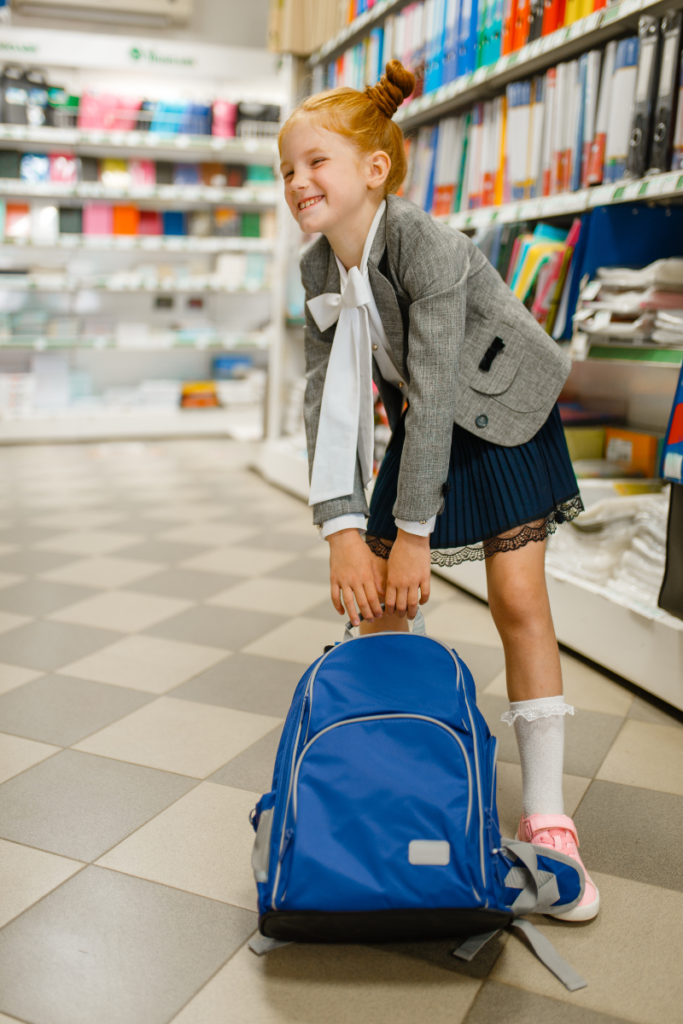
The weight of the empty bag itself contributes to this total, which is why the construction of the bag matters. A heavy bag before anything is packed into it leaves less room for actual school supplies within the recommended limit. When comparing two bags of similar quality and size, the lighter one is the better choice. That said, very lightweight bags are often made from thinner materials that wear out quickly. The goal is a well-constructed bag that does not add unnecessary weight of its own.
What to skip
Rolling backpacks are occasionally suggested as a solution to heavy loads. They do reduce the weight carried on the back, but they are impractical in most school environments. Stairs, crowded hallways, and wet outdoor surfaces all make wheeled bags harder to manage than a regular backpack. Most schools also do not have adequate storage for them. Unless there is a specific medical reason, a rolling backpack is rarely the right solution for an elementary school child.
Built-in USB charging ports and other tech features are occasionally marketed on school backpacks. These are unnecessary for elementary school children and add cost without adding function.
A quick checklist before you buy a kids backpack for school
Padded and ventilated back panel. Wide, well-padded shoulder straps with easy adjustment. One large main compartment, one medium compartment, one organizer pocket, two side pockets for water bottles. Reinforced base. Top grab handle. Reflective elements on the front, sides, and straps. A design your child will still want to carry in six months.
Frequently asked questions
What size backpack does an elementary school child need?
The backpack should sit completely within the child’s back when worn, not extending below the waist or above the shoulders. Most kids backpacks for school sized for ages five to ten are appropriate for elementary school. When in doubt, have your child try it on in the store with the straps adjusted properly before buying.
Should I buy a backpack with wheels for my child?
Generally no, unless there is a specific medical reason. Rolling backpacks are difficult to manage on stairs, in crowded hallways, and on wet surfaces. Most schools also lack adequate storage space for them. A well-fitted regular backpack is more practical for most elementary school children.
How do I know if a backpack fits my child properly and where should it sit?
The bottom of the backpack should rest at your child’s waist, not lower. The top should not extend above the shoulders. The straps should hold the bag close to the back without digging in. When worn correctly, the bag should not sag or sway when the child walks. If the bag hangs too low or moves around, adjust the straps. When in doubt, have your child try it on in the store with the straps adjusted properly before buying.
Are fashion brand backpacks okay for school?
It depends on the construction. The key thing to check is the back panel. A bag with no padding at all is not ideal for a child carrying textbooks daily. If the fashion brand bag has a padded back panel and adjustable straps, it may work well. If the back is unpadded, it is worth considering a different option.
How often should I replace my child’s school backpack?
A well-made backpack can easily last two or three school years if your child still likes it and it continues to fit their needs. Signs that a replacement is needed include broken zippers, torn seams, a compromised back panel, or straps that no longer adjust properly. Replacing a bag before it fails completely is better than waiting until midway through the school year.
Why does my child’s backpack need reflective elements?
Children walk to and from school in all seasons, including autumn and winter when light levels are low in the morning and afternoon. Reflective elements on a backpack make a child significantly more visible to drivers in low light conditions. It is a simple safety feature that should be standard on any school backpack.
What is the difference between a padded and a ventilated back panel?
A padded back panel cushions the contents of the bag against the child’s back. A ventilated back panel is designed to allow airflow between the bag and the back, reducing heat buildup and sweating. The best school backpacks have both: padding for comfort and ventilation for temperature regulation. These are separate features and both are worth looking for.
Should the shoulder straps be adjusted for different seasons?
Yes. A child wearing a t-shirt and a child wearing a winter coat need different strap settings to carry the bag at the correct height and angle. Straps that are easy to adjust mean the bag can be properly fitted throughout the year regardless of what your child is wearing.
What is a reinforced base on a backpack?
A reinforced base means the bottom of the backpack is made from a more durable material than the rest of the bag, or is structurally strengthened to resist wear. Some bags also have small rubber feet on the base, which protect the fabric when the bag is set down on hard or wet surfaces. Both features extend the life of the bag significantly.
How many compartments should a school backpack have?
For elementary school children, simpler is better. One large main compartment for books and notebooks, one medium compartment for a lunchbox or snack, one front organizer pocket for small items, and two side pockets for a water bottle. More compartments than this tend to create confusion rather than organization for younger children.
Should my child wear both backpack straps?
Yes, always. Wearing a backpack on one shoulder shifts the full weight to one side of the body, which can cause muscle strain and discomfort over time. Both straps distribute the weight evenly across both shoulders and keep the bag closer to the back, which is both more comfortable and better for posture. If your child consistently refuses to wear both straps, it is worth checking whether the bag is too heavy or whether the straps need adjusting.