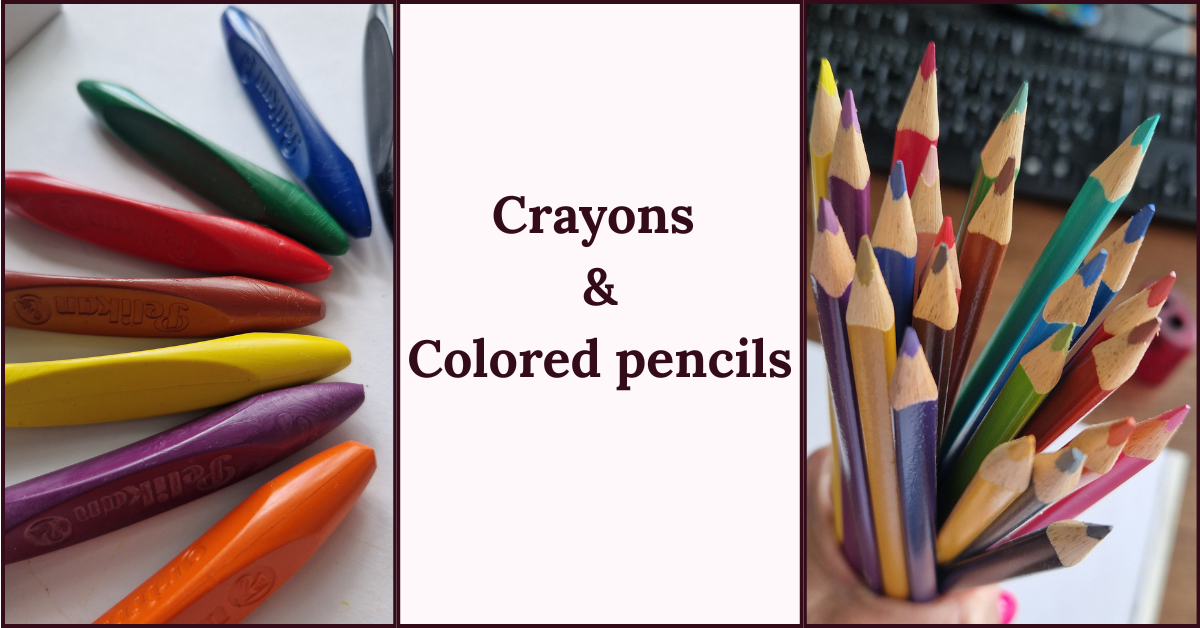
Crayons and colored pencils for kids: what to buy at every stage
Choosing the right crayons and colored pencils for your child is not as simple as grabbing the first box you see in the store. When I bought our daughter her first drawing tools, I knew immediately that colored pencils were not the right starting point for her age. Not because colored pencils are bad. But because at her stage, she was not ready for them yet.
The right drawing supplies for kids are not just about quality. They are about timing. A great colored pencil in the hands of a two-year-old is actually harder to use than a cheap one designed for small hands. In this guide I walk through exactly which drawing supplies to buy at each stage, and why the order matters more than most parents realize.
If you want a broader overview of what to buy for school, my complete school supplies guide covers everything from notebooks to backpacks.
Why drawing supplies for kids need to match the stage, not just the age
Drawing tools should evolve with your child’s development, just like shoes or bicycles. Children develop fine motor skills at different rates, so age ranges are always a guide rather than a rule. But the general progression from larger, easier-to-grip tools toward smaller, more precise ones reflects real developmental stages. Starting too early with a tool that requires precise grip and controlled pressure does not accelerate development. It can frustrate children and makes drawing feel hard instead of fun.
The goal at every stage is the same: keep the experience enjoyable. A child who enjoys drawing will draw more, and drawing more is what actually builds the hand strength and coordination they need for writing. The right tool at the right time makes that possible.
Stage 1: Palm-grip crayons for the very youngest
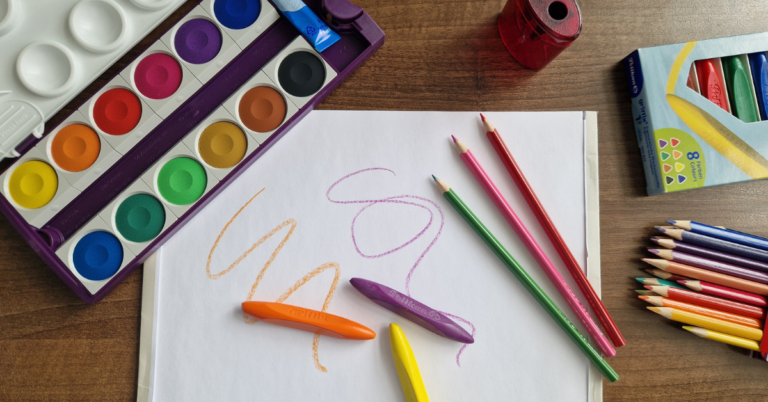
Before a child can hold a pencil or even a standard crayon, they can grip something in their palm. This is where palm-grip crayons come in. These are chunky, often egg-shaped or animal-shaped crayons designed to fit entirely in a toddler’s fist. A child does not need to pinch or control them the way they would a pencil. They simply hold and move.
Palm-grip crayons are often the best first drawing tool for toddlers. They are almost impossible to snap, they come in washable formulas, and they give young children the experience of making marks on paper before their hands are ready for anything more precise. Look for non-toxic and washable on the packaging, which is standard for most products in this category.
Our daughter first encountered drawing tools at her cousin’s house, where she tried colored pencils and found them genuinely difficult to manage. What caught my attention was how interested she was in the colors themselves. A few days later I bought her mouse-shaped palm-grip crayons, knowing they were designed exactly for the kind of grip her hands were ready for. She took to them immediately.
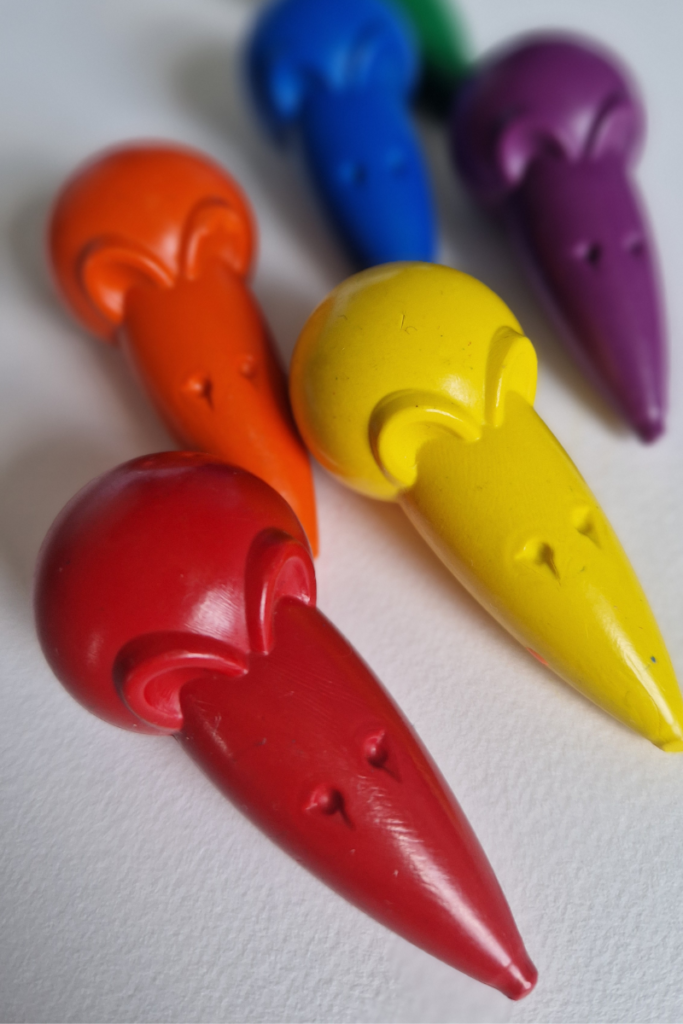
Egg-shaped and other palm-grip crayons work especially well because the shape naturally positions the hand in a way that is comfortable for small fingers. Whatever the name, the defining feature is the chunky, holdable shape rather than the standard cylindrical crayon form.
Stage 2: Triangular jumbo crayons
Once a child starts showing more intentional grip, reaching for objects with their fingers rather than their whole fist, triangular jumbo crayons are the next step. These are standard-length crayons with a triangular cross-section and a thicker-than-average barrel.
A triangular shape can be helpful because it has three flat sides that naturally encourage the fingers to settle into a position that resembles a comfortable pencil grip. This does not guarantee a perfect grip, but it can help guide small hands toward a more natural hold without the child having to think about it. A round crayon offers no such guidance.
Jumbo size matters at this stage because small hands still struggle to maintain a stable grip on standard-width crayons. A thicker barrel means less slipping and less tension in the fingers during longer coloring sessions.
Once our daughter was confident with the palm-grip crayons, we moved on to triangular jumbo crayons. The ergonomic shape meant she could hold them comfortably from the start, and she still uses them now.
Look for crayons with vivid, high-pigment color at this stage. If the color is pale or washed out, children tend to press harder to get a stronger result, which is tiring and counterproductive. A crayon that produces bright, satisfying color with light pressure keeps drawing enjoyable.
In the United States, crayons are a standard classroom tool used across many subjects, not just art class. Teachers often purchase jumbo crayons for the communal classroom supply, but a good quality standard crayon is worth buying for home use too.
Stage 3: Short triangular jumbo colored pencils
When a child shows they can hold a crayon with their fingers rather than their fist, and can make reasonably intentional marks on paper, it is time to introduce colored pencils. But not the standard-length ones most people think of first.
A good first option for many children is a short, thick, triangular colored pencil. Some manufacturers make colored pencils specifically sized for children’s hands, noticeably shorter than the standard full-length pencil. Shorter pencils are easier to control because there is less length to manage. A child gripping the middle of a long pencil loses leverage and control. A short pencil fits naturally in a small hand.
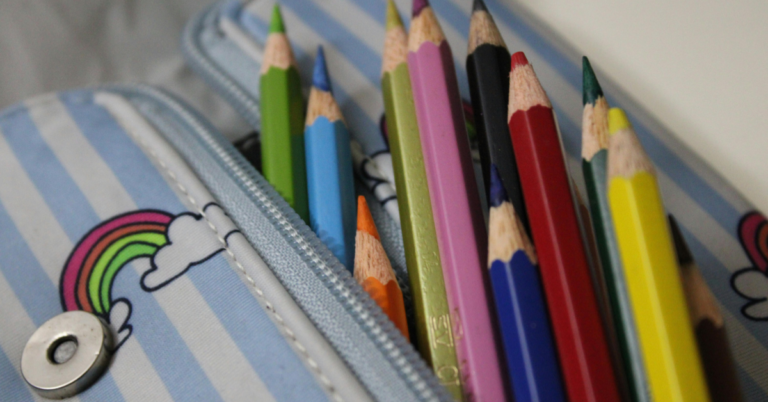
At this stage, a colored body is worth looking for. Natural wood-finish pencils are popular and attractive, but for a young child trying to find the red pencil in a full set, a naturally finished barrel gives almost no visual cue. A colored barrel, where the wood itself is painted or dyed to match the pencil’s color, makes it dramatically easier to find the right pencil quickly. Less searching, more drawing.
Break resistance matters here too. Children at this stage still drop pencils constantly, and as I explain in my school supplies guide, every drop can crack the lead inside the barrel without any visible damage. The next time the pencil is sharpened, the tip snaps off. A break-resistant pencil has a bonded lead that absorbs impact instead of cracking.
Stage 4: Standard length jumbo triangular colored pencils
Many parents assume that jumbo and triangular colored pencils are only for toddlers and preschoolers. In practice, many first graders continue to benefit from them too. When children are still developing their three-point pincer grip, the one where the pencil rests between thumb, index, and middle finger, a thicker barrel and triangular shape continue to support correct hand positioning.
The move from short to standard length at this stage is the main change. The child’s hand is larger now and can manage the extra length without losing control. Everything else stays the same: jumbo barrel, triangular cross-section, colored body, break-resistant lead, vivid pigment.
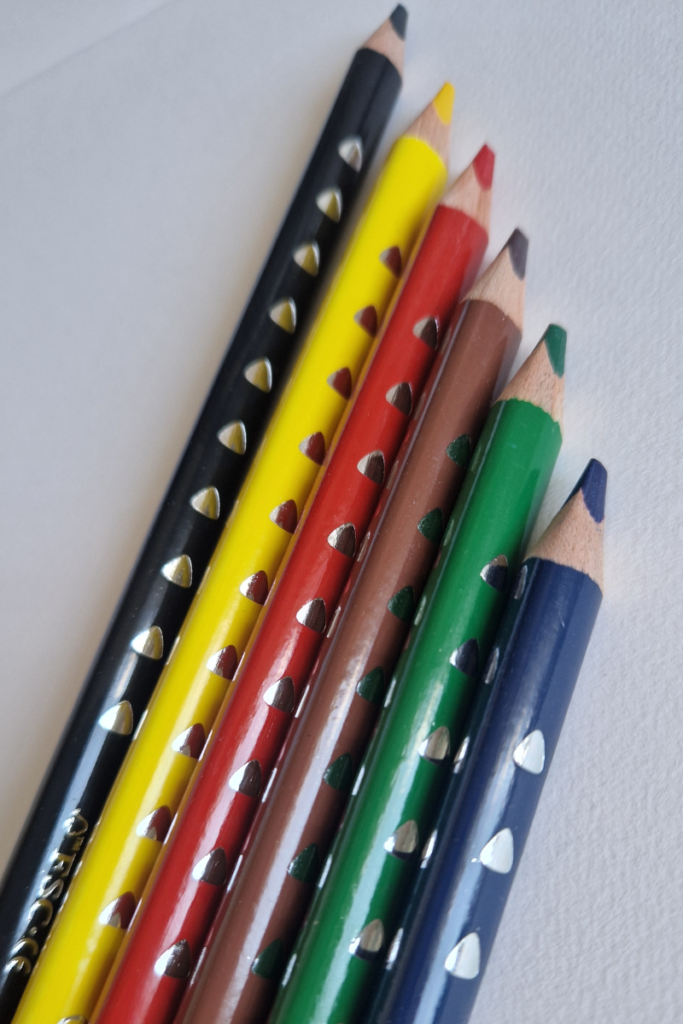
A note on quantity: a set of 12 colors is enough for most children at this stage. A larger set is visually exciting but can be overwhelming and harder to organize. The most important colors are all present in a standard 12-color set. Save larger sets for home creative projects where having more shades genuinely adds something.
Stage 5: Standard colored pencils from second grade onward
By second grade, many children have developed a consistent three-point pencil grip and can manage a standard-width, standard-length colored pencil without difficulty. This is often when the full range of colored pencil options opens up, though every child develops at their own pace.
For everyday school use and general home coloring, a good mid-range colored pencil set is the right choice. What makes a mid-range pencil worth buying is pigment intensity. A colored pencil that produces rich, vivid color with normal pressure is genuinely more enjoyable to use than one that requires effort to get a visible result. Children who use pale, unresponsive pencils often press too hard, which tires their hands and breaks tips more frequently.
If a child shows a genuine interest in drawing, or attends an art class, it is worth considering a higher-quality set. Artist-grade colored pencils have softer, more pigmented leads that blend more smoothly and produce more nuanced results. They are not necessary for school use, but for a child who loves drawing they make a real difference.
On sustainability: if your family prioritizes environmental responsibility, look for colored pencils made from FSC-certified wood. The FSC label confirms the wood comes from responsibly managed forests. If you want to learn more about what FSC certification means, you can find all the details at fsc.org.
What about markers and other drawing tools?
Crayons and colored pencils cover most of what children need for drawing at home and at school, but markers deserve a mention. Washable markers are a good addition from preschool age onward. They produce vivid color with almost no pressure, which makes them particularly satisfying for children who have not yet built up hand strength. Look for water-based, non-toxic markers with ventilated caps.
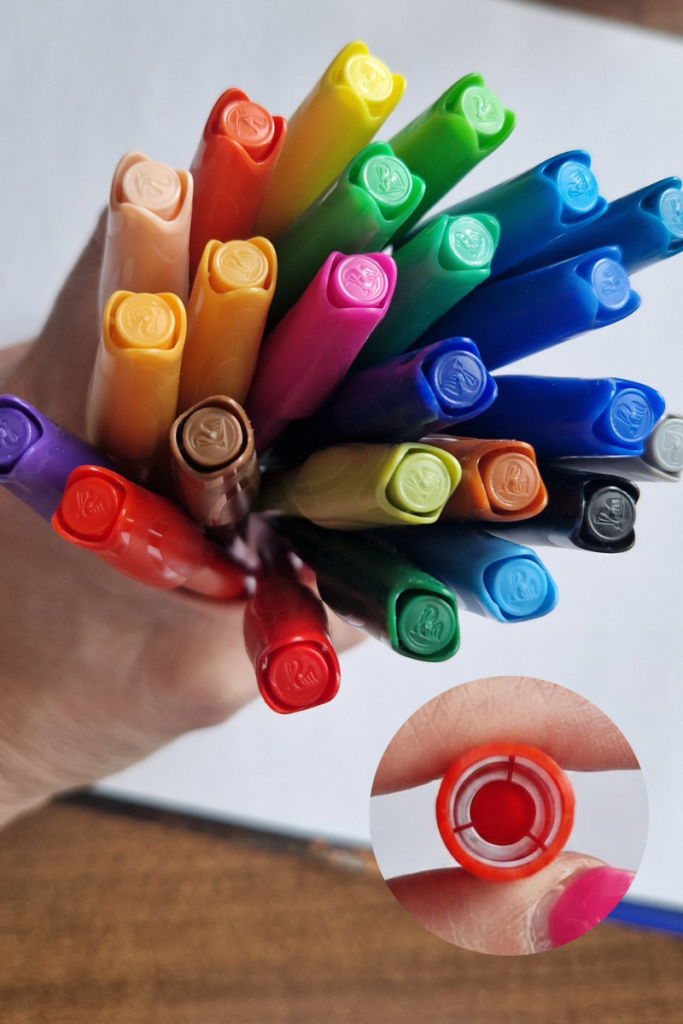
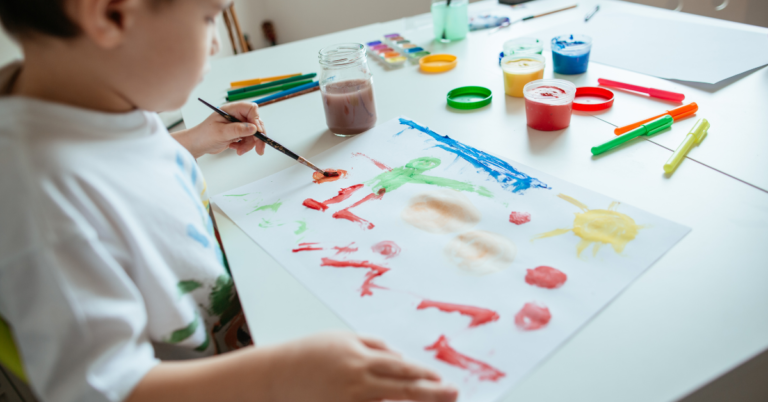
Watercolor paints are worth introducing once a child can manage a brush with some control, usually from around three to four years old. They teach a completely different mark-making skill and produce results that are very different from crayons or pencils. For a full breakdown of markers, watercolors, and other art supplies, my school supplies guide covers each category in detail.
A summary of the stages
To make this easier to reference, here is the progression at a glance. Palm-grip crayons for the youngest children who are just beginning to make marks. Triangular jumbo crayons once intentional finger grip develops. Short triangular jumbo colored pencils as the first pencil. Standard length jumbo triangular colored pencils through first grade. Standard colored pencils from second grade onward, with artist-grade options for children who love to draw.
The most important thing to remember is that moving through these stages too quickly tends to make drawing harder and less enjoyable. There is no developmental advantage to putting a standard pencil in a three-year-old’s hand. There is a real advantage to giving them a tool that fits.
Frequently asked questions
What drawing supplies should I buy for a two-year-old?
Palm-grip crayons are the right starting point for most two-year-olds. Look for chunky, egg-shaped or animal-shaped crayons in a washable, non-toxic formula. These are designed to be held in the whole hand rather than gripped with the fingers, which is exactly what a two-year-old’s hands are ready for.
When should I introduce colored pencils to my child?
Most children are ready for their first colored pencils once they can hold a crayon with their fingers rather than their fist and make intentional marks on paper. For many children this happens between ages three and four, but the readiness sign matters more than the specific age. Start with short, thick, triangular colored pencils rather than standard ones.
Are jumbo colored pencils only for toddlers?
No. Jumbo and triangular colored pencils are genuinely useful through first grade for most children. A thicker barrel is easier to hold steadily when hand strength and fine motor control are still developing. There is no reason to switch to standard size pencils before a child is comfortably ready.
Why do colored pencil tips keep breaking?
Tip breakage is almost always a quality issue rather than a child behavior issue. Cheaper colored pencils have leads that are more brittle and more likely to crack when the pencil is dropped. Every drop can crack the lead inside the barrel invisibly, so the tip snaps off the next time the pencil is sharpened. Look for pencils described as break-resistant, which have a bonded lead that absorbs impact.
What does it mean when a colored pencil has a colored body?
A colored body means the barrel of the pencil, the wood part, is painted or dyed to match the color of the pencil’s lead. For young children who are still learning to identify colors, a colored body makes it much easier to find the right pencil in a set. Natural wood-finish pencils only show the color at the very tip, which is harder to distinguish quickly.
How many colored pencils does a child need?
A set of 12 colors covers all the basics for school and everyday home use. Larger sets are exciting but can be overwhelming for younger children and harder to keep organized. For children who love drawing or attend art classes, a 24-color set offers more variety without becoming unmanageable.
What are palm-grip crayons?
Palm-grip crayons are chunky, ergonomically shaped crayons designed to be held in a toddler’s whole palm rather than gripped with the fingers. They come in egg shapes, animal shapes, and other compact forms. They are the easiest drawing tool for very young children to use and a good starting point before moving on to standard crayons.
Are washable crayons good quality?
Washable crayons are a good choice for younger children. The washable formula genuinely does come off most surfaces and fabrics with water. The color is sometimes slightly less intense than non-washable crayons, but the difference is minor for everyday use. Some crayons are also described as water resistant, which is a different property: it means the colors will not blend when you go over them with a wet brush, not that they are easy to wash off surfaces.
What is FSC certification on colored pencils?
FSC stands for Forest Stewardship Council. It means the wood used to make the pencil comes from responsibly managed forests. If sustainability matters to your family, looking for FSC-certified pencils is a simple way to make a more conscious choice.
When should a child move to artist-grade colored pencils?
Artist-grade colored pencils are not necessary for school use at any age. They are worth considering if a child shows a genuine enthusiasm for drawing, attends an art class, or asks for more from their pencils than a standard set can offer. Artist-grade pencils have softer, more pigmented leads that blend more smoothly and produce richer results, but the quality difference is only meaningful when a child is drawing intentionally and regularly.