The ultimate parent’s guide to the elementary school supplies list
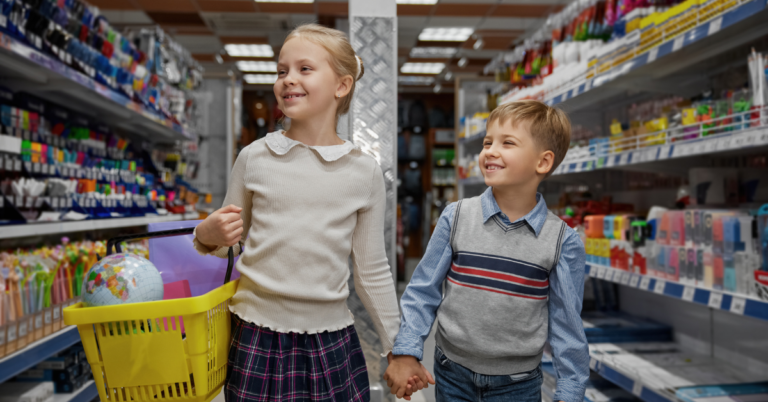
Every August, millions of parents stand in the school supplies aisle holding a list in one hand and a crayon box in the other, wondering what on earth the difference is between all those options. I have spent 25 years in the paper and stationery industry. And now that I am a mom too, I find myself thinking: the things I know about these products, the ones that feel completely obvious to me, are probably things most parents simply never needed to know before. So I decided to share them.
Recently, while buying our daughter her first art supplies, I realized how much of what I know about these products most parents simply never needed to know before. Until now, that is. Not a shortcut to grabbing whatever is on the elementary school supplies list. Just honest, practical advice from someone who has spent decades handling these products.
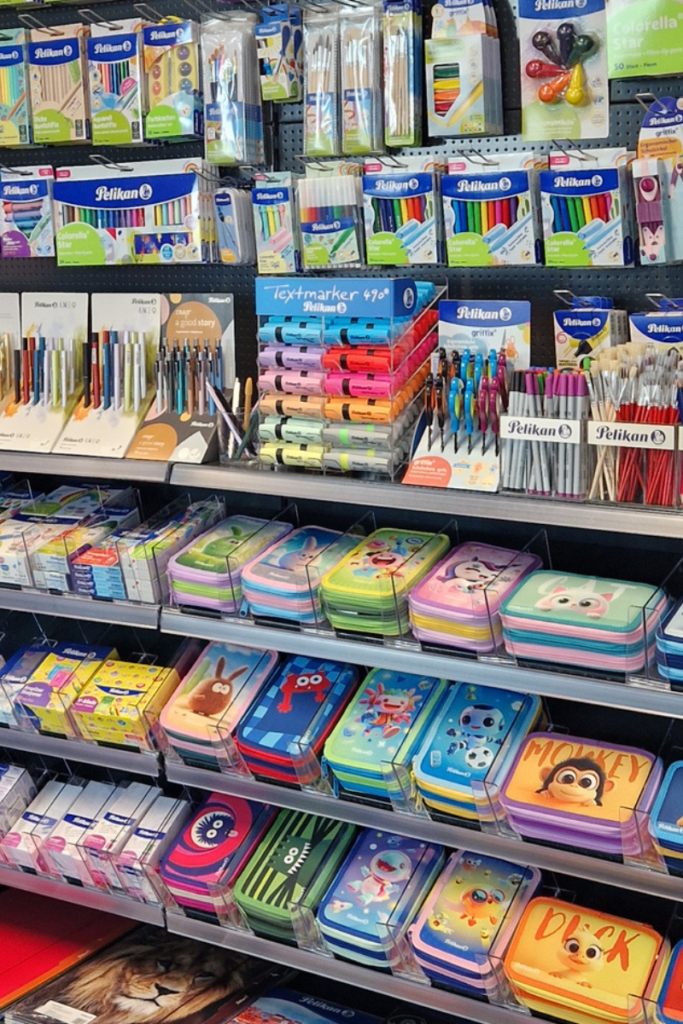
If you are the kind of parent who wants to get in and out of the store in fifteen minutes, I respect that. But if you have ever wondered why your child’s colored pencils break every time they sharpen them, or why the eraser smears instead of erasing, this guide is for you.
Why the elementary school supplies list feels so overwhelming
Kindergarten school supplies and first grade school supplies often look similar on paper, but the quantities and specific items can vary quite a bit by classroom. Teachers request particular types of notebooks, specific marker sizes, and sometimes even brand names. If your child’s list specifies a brand, it is worth following: Crayola crayons, Elmer’s glue sticks, and Ticonderoga pencils are among the most commonly requested, and teachers ask for them for good reasons. For a first-time parent, the list can feel like it is written in another language.
The truth is that most of the confusion comes from not knowing what the labels actually mean. Throughout this guide I explain what the most common labels actually mean, from non-toxic and washable to FSC and break-resistant, so you know what you are looking at before you reach for a product. The good news is that once you understand the basics of what to look for in each category, the list stops being overwhelming. You start to see what actually matters and what does not. And that makes the whole list much easier to get through.
The most important thing to check before you buy anything
In the United States, children’s school and art supplies that are safe for kids will typically carry a non-toxic label or the ACMI AP Seal, which stands for Approved Product. This seal means the product has been evaluated by toxicologists and certified as safe for children to handle. When you are buying art supplies, markers, crayons, or anything your child will use daily, these are the labels to look for. Products that also state compliance with applicable U.S. safety standards, including ASTM F963, offer an additional layer of assurance. You can find more information about children’s product safety at cpsc.gov.
This is not something most parents think to check. It takes five seconds and it matters.
Notebooks: wide ruled, college ruled, and what else to check
Notebooks are on almost every elementary school supplies list, and the labels on them confuse more parents than you might expect. The two terms you will see most often are wide ruled and college ruled, and they refer to the spacing between the lines on the page.
Wide ruled paper has lines that are 11/32 of an inch apart. College ruled paper has lines that are 9/32 of an inch apart, which is noticeably closer together. For elementary school children, especially in kindergarten through fourth grade, wide ruled is the right choice. The wider spacing gives children more room to form their letters as they are still learning to write. College ruled is designed for older students whose handwriting is smaller and more controlled.
If your child’s supply list specifies wide ruled, do not substitute college ruled even if it is on sale. The difference genuinely matters for young children who are still building their handwriting.
You will also see two main notebook formats on supply lists. A composition notebook has a hard cardboard cover and sewn or glued binding, which makes it more durable. Pages cannot be torn out easily, which some teachers prefer. A spiral notebook has a wire coil binding and a softer cover, and pages can be removed cleanly. Both are widely used in elementary schools. Check whether your child’s teacher has requested one specifically.
One practical note: always check whether the list specifies the number of pages or subjects. A “1-subject” spiral notebook has one section. A “3-subject” has three, separated by dividers. Buying the wrong format is an easy mistake that a quick read of the list will prevent.
Writing tools: pencils, colored pencils, and crayons
Pencils
The pencil is the most used tool in an elementary school child’s day, and also the most misunderstood. Most parents grab the cheapest box they can find. I understand the impulse. But a bad pencil can actually make learning to write harder.
Here is what matters. The hardness scale runs from 9H (very hard, pale line) to 9B (very soft, dark and smudgy). For elementary school children, you want a #2 pencil. This is the standard everyday writing pencil and it is what most school supply lists specify. In the international grading system this is called HB.
A triangular barrel and a jumbo size are both worth considering, even for first graders. Many parents assume these are only for preschoolers, but while children are still learning to write and developing pencil control, a thicker barrel is easier to hold steadily, and some children find a triangular shape more comfortable because it naturally encourages finger placement. Starting school does not suddenly make these features any less useful.
A triangular barrel is also worth choosing for a practical reason: round pencils roll off desks. A triangular shape stays put. When your child is ready to move on from jumbo size, stay with triangular first. The hexagonal barrel is a good next step after that, easier to grip than round and still less likely to roll.
Look for pencils described as break-resistant. The graphite lead runs through the center of the wood, and cheaper pencils often have leads that are off-center or poorly bonded. When your child sharpens them, the tip breaks off immediately. This is not your child being rough. It is the pencil.
There is another reason break-resistant matters: children drop pencils. It happens dozens of times a day. Every time a pencil hits the floor, the graphite lead can crack inside the wood without any visible damage on the outside. The next time your child sharpens it, the tip breaks off again. And again. The pencil gets shorter and shorter, and before long you are buying a new box. A break-resistant pencil has a bonded lead that absorbs the impact instead of cracking.
Colored pencils
The single most common complaint I hear from parents about colored pencils is that the tips break constantly. This is almost always a quality issue, not a child behavior issue.
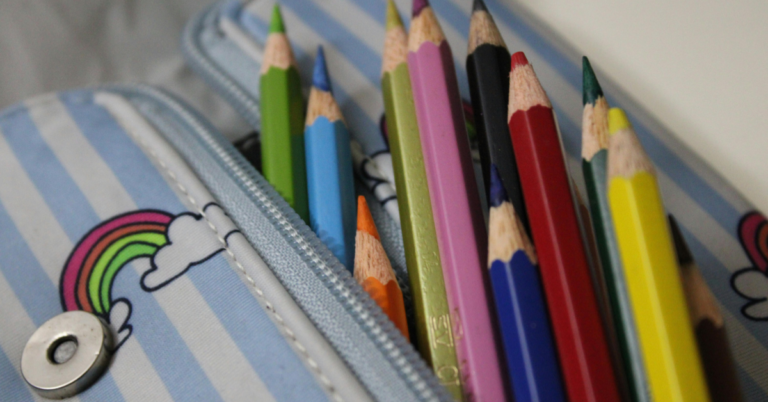
A good colored pencil has a soft lead that glides across the paper without pressure. A poor one requires the child to press hard, which both breaks the tip and tires out their hand. And here is something worth knowing: if a child is pressing unusually hard, it is often because the color is not showing up well enough. Vivid, intense color makes drawing more enjoyable and reduces the urge to press down harder to get a stronger result. Look for colored pencils described as having vivid or bright color. Better quality pencils produce richer, more satisfying color with normal pressure. The difference in the drawing experience for a child is significant.
For young children, thick or jumbo barrels are easier to hold. And just like with regular pencils, break-resistant colored pencils are worth looking for. Children drop them just as often, and the same thing happens inside: the lead cracks on impact, the tip breaks every time they sharpen it, and the pencil is gone before it should be.
If environmental sustainability matters to your family, look for the FSC label on the packaging. It means the wood used in the pencil comes from responsibly managed forests. It is a small detail that is easy to check and costs nothing extra.
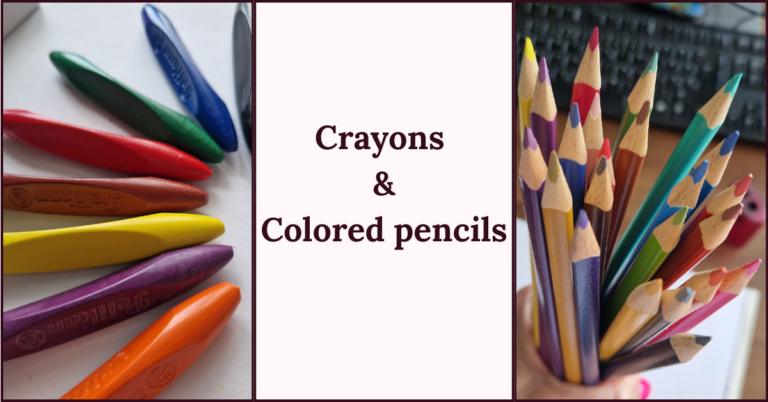
For more detail on which crayons and colored pencils to buy at each stage of your child’s development, I cover the full progression in my crayons and colored pencils guide.
Crayons
In American elementary school classrooms, crayons are one of the most used tools a child has. They come out not just for art class but for coloring in worksheets, labeling diagrams, and a wide range of classroom activities across different subjects. This is worth knowing before you buy, because a crayon that produces poor color or breaks easily is not just annoying at home. It is a source of daily frustration at school.
For young children, thicker crayons are better. Jumbo crayons are easier for small fingers to grip and harder to snap accidentally. Some crayons made for young children also come in a triangular shape, which can help guide the fingers toward a more natural grip from the very beginning, the same reason triangular pencils are worth looking for. And just like with pencils, do not assume jumbo and triangular crayons are only for toddlers. First grade school supplies often still benefit from these shapes, since many children are still building hand control at that age.
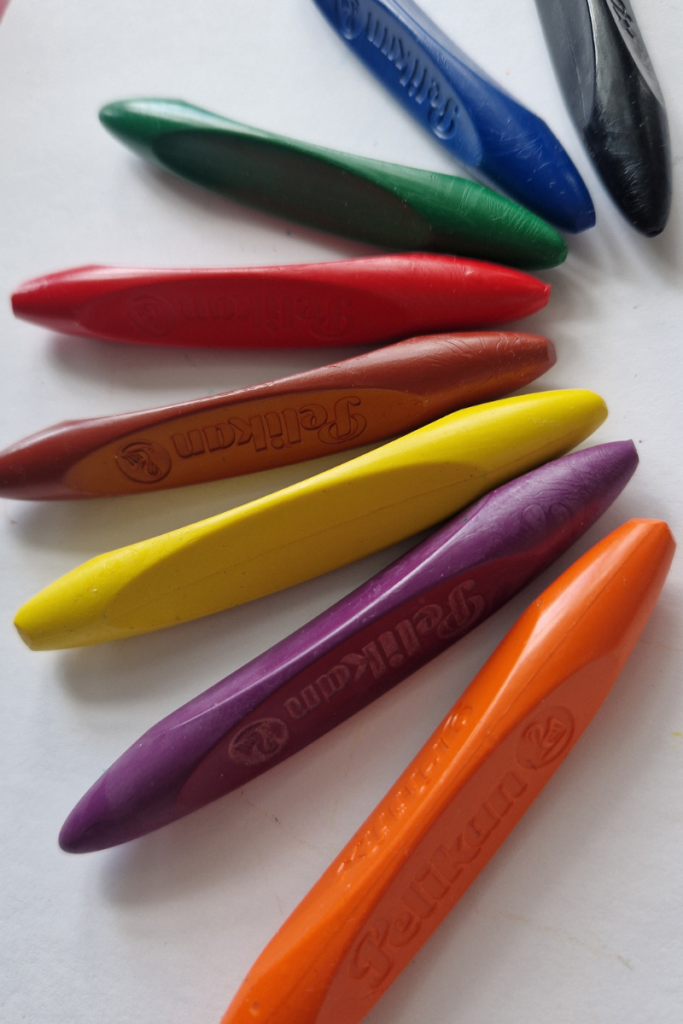
One more label worth understanding: washable. A washable crayon formula genuinely does come off most surfaces and fabrics in a regular wash, which matters more than you might think the first time your child decides the wall is a better canvas than the paper. Some crayons are also designed to resist smudging or color blending when used with water, which is a completely different feature from being washable.
Color intensity matters more than most parents realize. A crayon that produces a pale, washed-out line is genuinely frustrating for a child who is trying to make something. Look for crayons described as having vivid or bright color. Better quality crayons produce richer, more satisfying color with normal pressure, which makes coloring more enjoyable and reduces the urge to press down harder.
Art supplies: markers and watercolor and tempera paints
Markers
Not all markers are created equal, and the tip size matters more than the color range. For elementary school art classes, a medium tip marker is the most versatile choice. It works for coloring, outlining, and general use without being so fine that it dries out quickly or so broad that children cannot control it.
Washable markers are worth the slightly higher price for everyday home and school use. Look for markers that are described as water-based and non-toxic. The best ones also have ventilated caps, meaning if a small child puts the cap in their mouth, it does not block airflow. Many children’s markers include ventilated caps as an additional safety feature and it is worth checking for.
Double-ended markers, with a different tip on each end, are good value when the two ends serve genuinely different purposes, such as a fine tip and a broad tip. Some double-ended markers offer two shades of the same color instead, which works well for children who like to use a darker shade for outlines and a lighter one for filling in. Neither version is better than the other. It depends on what your child likes to do.
Watercolor and tempera paints
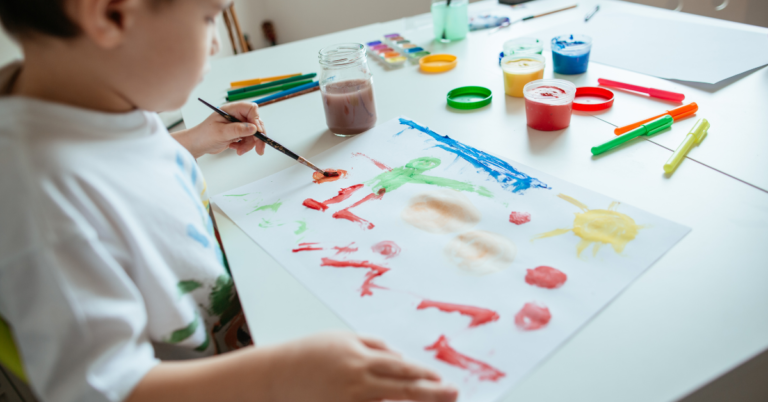
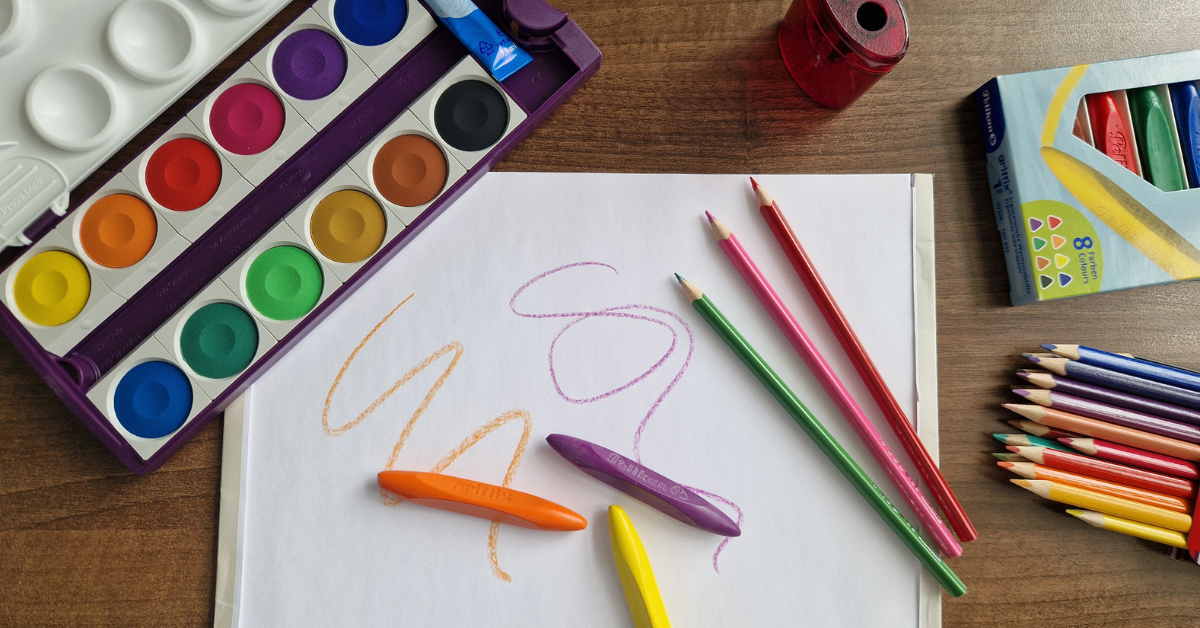
Watercolor paints are not always on the elementary school supply list. In many U.S. schools, the art teacher orders paints for the classroom rather than asking parents to bring them. If watercolor paints are listed on your child’s supply list, quality matters more than most parents realize. Watercolor is a transparent medium, which means you always work from light to dark. The quality of the paint comes down to how vivid the color is. A cheap watercolor set produces thin, washed-out color that frustrates children. A better set produces rich, visible color with less effort.
Look for sets with larger color pans rather than small ones. A bigger surface area means your child can actually load the brush with paint easily. Smaller pans are harder for little hands to aim at accurately, which means more misses, more mess on the tray around the pans, and more water than paint on the brush.
One more thing worth looking for: some watercolor sets have a lid that doubles as a mixing palette. It is easy to rinse clean and means one less thing to pack in the school bag.
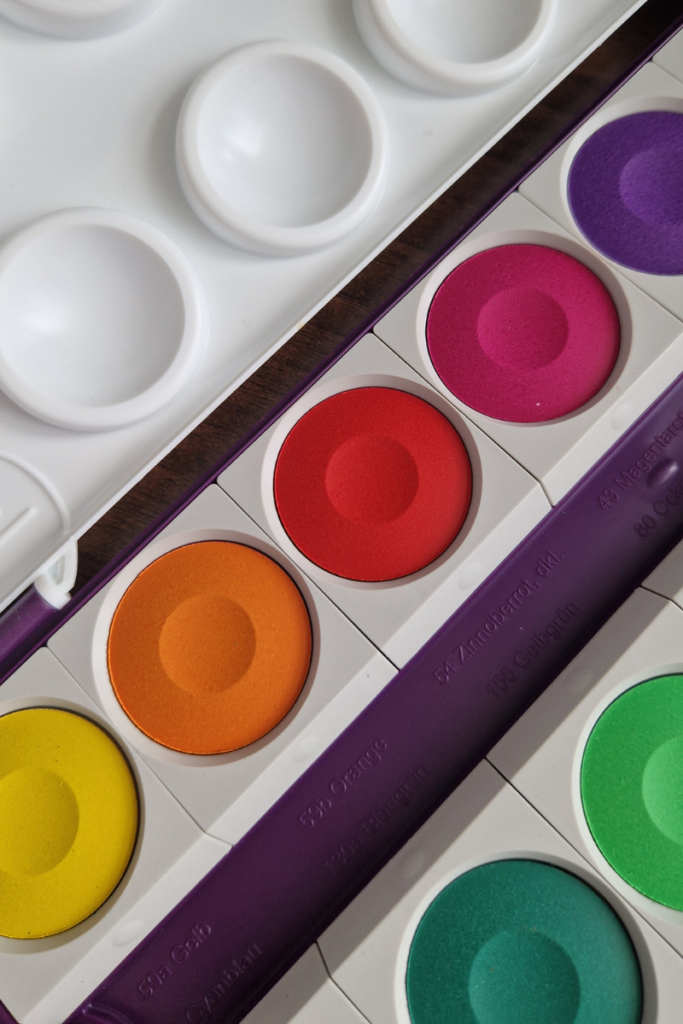
If your child’s school also requires tempera paint, that is a different product entirely. Tempera is opaque, meaning it covers whatever is underneath it, and it works on a much wider range of surfaces. For school projects, both have their place.
The small stuff that actually matters: scissors, erasers, sharpeners, and glue
These are the products parents spend the least time thinking about, and they are also the ones that cause the most daily frustration.
Scissors
Children’s scissors should be sized for children’s hands. This sounds obvious, but many parents buy standard scissors and wonder why their child cannot use them properly. Look for scissors with plastic handles sized for small fingers and a blade length appropriate for the age.
If your child is left-handed, this matters enormously. Standard scissors are designed for right-handed use. Left-handed children using right-handed scissors have to twist their wrist awkwardly to see the cutting line, which makes clean cuts nearly impossible. Left-handed scissors are not more expensive. They are just worth buying. I cover this in much more detail in my guide for left-handed children.
Spring-assisted scissors, also called self-opening scissors, have a small spring built into the handle that automatically reopens the blades after each cut. The child only needs to focus on the closing motion, which makes it much easier to learn the correct cutting technique. They are a good choice for children who are just starting to use scissors and are still building the coordination and hand strength that cutting requires.
Erasers
A bad eraser does not erase. It smears. The difference is in the material. Rubber erasers are the classic choice and work well for general correction. Plastic or vinyl erasers are softer, produce less residue, and are gentler on paper. Whichever type you choose, look for phthalate-free on the packaging. Phthalates are chemical compounds used in some rubber products that research has associated with health concerns, and they have no place in a product your child handles every day.
Pencil sharpeners
For pencil sharpeners, a metal mechanism with a shavings container is worth buying once and keeping. Cheap plastic sharpeners with single blades dull quickly and produce the broken tips I mentioned in the pencil section. A quality sharpener that can handle both standard and jumbo pencils is worth the small extra cost.
Glue
Most elementary school supply lists ask for glue sticks as the primary item. Liquid glue sometimes appears too, usually in smaller quantities, for specific classroom projects. The two are not interchangeable. A glue stick applies a solid layer of adhesive that goes on clean and dry, with no dripping or smearing. It is easy for young children to control and leaves no mess. Liquid glue is applied in its fluid state and hardens as it dries. It bonds more strongly and works on a wider range of surfaces, but it spreads easily and can make a mess if a child uses too much. For everyday paper crafts and light projects, a glue stick is the better choice. For anything that needs a stronger hold, liquid glue is the right tool. Choose solvent-free options for both.
Backpacks: what actually matters beyond the design
A backpack is probably the single most expensive item on the elementary school supplies list, and also the one where parents most often prioritize the wrong things.
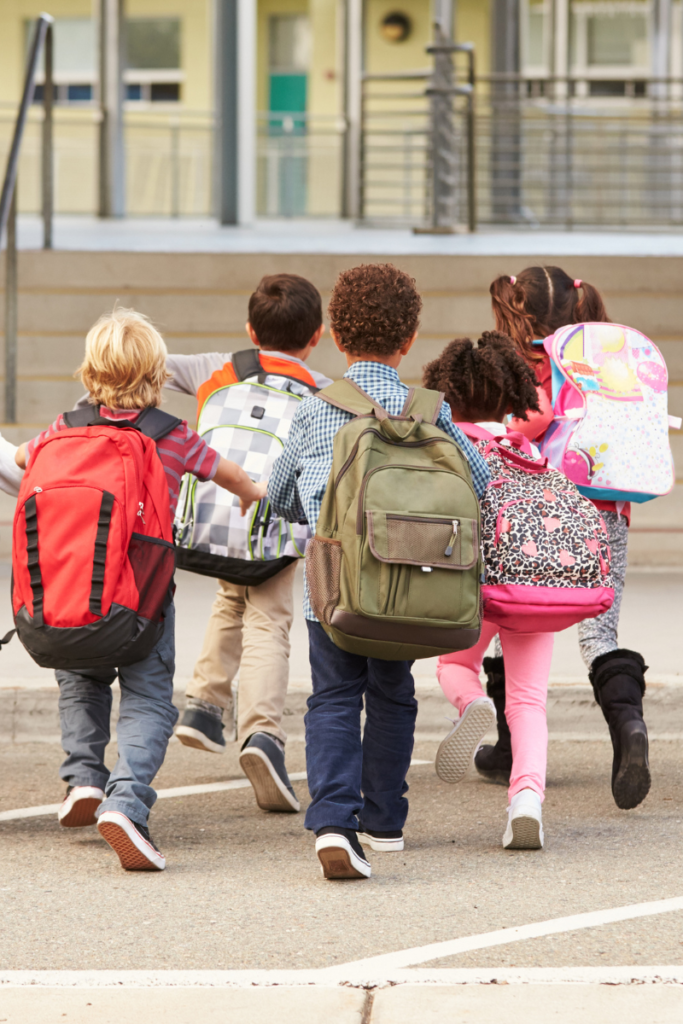
The design, the color, and the favorite character on the front are the first things children notice. They are also the least important factors for long-term comfort. What actually matters is the fit, and fit changes as children grow.
The shoulder straps should be padded and at least 1.5 inches wide. Narrow straps concentrate weight on a small area of the shoulder, which becomes uncomfortable within an hour. The back panel should be padded and ventilated so that it does not trap heat against your child’s back during the walk to school.
The bag should sit completely within the child’s back when worn correctly, not extending below the waist or above the shoulders. When loaded, the total weight should not exceed ten percent of your child’s body weight. This is a guideline supported by the American Academy of Pediatrics, and most school backpacks exceed it regularly when filled with textbooks.
When comparing two backpacks of similar quality and size, the lighter one is the better choice. Every gram of bag weight is a gram your child carries in addition to their books. But very light bags are often made from thinner materials that wear out quickly. What you are looking for is a well-constructed bag that does not add unnecessary weight. I go into much more detail on backpack selection in my dedicated backpack guide.
Pencil cases: pencil box, pencil pouch, or something else?
There are two main types of pencil case in the United States: the pencil box and the pencil pouch.
The pencil box is a rigid plastic container with a hinged lid and snap closure. It sits flat on a desk and holds supplies neatly. Many pencil boxes have a simple single-compartment design that keeps supplies visible and within reach, helping younger children find what they need quickly.
The pencil pouch is a soft zippered case, usually with one or two compartments. It fits inside a binder or backpack easily. Older children tend to prefer it because it is flexible and takes up less space.
In many European countries, organized pencil cases with elastic loops for each tool are common in elementary school. These are less widely available in the United States, but can be found online and may be worth trying if your child’s school allows them, or as a second pencil case for home use.
Always check your child’s supply list before buying a pencil case, since many teachers request a specific type.
When it is worth spending more and when it really is not
A quick note on budget: you do not need to buy the most expensive version of everything. Quality matters most for the tools your child uses every single day, like pencils, colored pencils, and the backpack. For consumables like glue sticks and notebooks, a mid-range option is perfectly fine. I go into much more detail on this in my guide on when it is worth spending more on school supplies.
Use this guide as your school supply checklist before you head to the store, so you know exactly what to look for in every category. School supply shopping does not have to be a guessing game. The more you know about what you are actually holding in your hand, the easier it is to make a choice you feel good about. I hope this guide gives you exactly that: not a perfect elementary school supplies list, but the confidence to build your own.
Frequently asked questions
What is the most important thing to look for on an elementary school supplies list?
Read the list carefully before you shop and check whether your child’s school specifies types or sizes. Many frustrations come from buying the wrong notebook format or marker tip size. When in doubt, a quick email to the teacher before shopping saves time.
Are expensive school supplies actually better?
Sometimes, and in specific categories. Pencils and colored pencils are worth paying a little more for because quality directly affects how well they work. For consumables like glue sticks and plain notebooks, mid-range products are usually fine.
How many colored pencils does a child really need?
For everyday school use, a set of 12 to 24 colors is plenty for most children. A larger set sounds appealing but can be overwhelming for younger children who are still learning to organize their supplies. A quality set of 12 covers all the basics. Save the bigger sets for home creative projects where having more shades genuinely adds something.
Should I buy left-handed scissors for my left-handed child?
Yes, absolutely. Left-handed scissors are not a luxury. Standard scissors require left-handed children to twist their wrist in a way that makes cutting correctly almost impossible. Left-handed scissors are widely available and cost the same as standard ones.
What pencil hardness is best for elementary school children?
A #2 pencil is the standard everyday choice and it is what most school supply lists specify. In the international grading system this is called HB. Avoid hard pencils for writing, as they produce a faint line that requires more effort.
How heavy should a school backpack be?
The general guideline is no more than ten percent of your child’s body weight when loaded. Most school backpacks exceed this when filled, which is why the empty weight of the bag itself matters. The lighter the bag, the more room there is for actual books and supplies.
What is the difference between watercolor and tempera paint?
Watercolor is transparent and works by building up layers from light to dark. Tempera is opaque and covers whatever is underneath it. Schools use both for different projects. They are not interchangeable, so check what your child’s teacher has actually requested.
What does the FSC label mean on pencils and colored pencils?
FSC stands for Forest Stewardship Council. It means the wood used to make the pencil comes from responsibly managed forests where trees are replanted and ecosystems are protected. If environmental sustainability matters to your family, the FSC label is a simple way to make a more conscious choice without paying more.
Should first graders use jumbo pencils?
Yes, jumbo pencils can be a good choice for first graders who are still developing their writing grip and pencil control. A thicker barrel is easier to hold steadily and reduces the tension that comes from gripping a standard pencil too tightly. Many children naturally transition to standard size pencils as their fine motor skills develop, but there is no rush to make that switch.
Are washable markers worth it?
For younger children, yes. Washable markers genuinely do come out of most fabrics and surfaces with water, which matters more than you might expect. The color payoff is sometimes slightly less intense than non-washable markers, but for everyday school and home use the difference is minor. For older children who are doing more detailed art work, non-washable markers produce richer, more permanent results.
Should I label school supplies?
It depends on whether your child’s classroom uses individual or shared supplies. Some teachers ask each child to keep their own labeled supplies at their desk. Others collect everything into a shared classroom pool, where labeling individual items like crayons or pencils is unnecessary, since they will be used by the group. Check your child’s supply list or ask the teacher directly. If items like backpacks, lunch boxes, or jackets are not part of a shared system, labeling those is always a good idea regardless.