She Had Never Seen Grass Before — How We Introduced Our Daughter to the World
What do toddler sensory activities look like when your child has never touched grass, never felt the wind on her face, and never looked up at a sky that stretched further than a balcony railing?
That was the question we were quietly asking ourselves in the weeks after our daughter came home. And the answer, it turned out, was simpler than anything we had planned. Nature itself became our guide to toddler sensory activities, one small discovery at a time.
The world she stepped into
Our daughter spent the first fourteen months of her life in a baby home. Apart from a few hospital visits, the walls of that building were the boundary of her entire world. She slept on the terrace sometimes, the way all the babies did, but the garden below was somewhere she had never been. Too small, they said. Not ready for that yet.
So when she first came outside with us, during the getting-to-know-you visits before she even moved in, the world hit her all at once.
The first thing we noticed was her eyes. The light made them water immediately. She had simply never been in outdoor daylight for any real length of time, and her eyes had no idea what to do with it. That sensitivity lasted for months, well after she had settled into life with us. Gradually, slowly, it faded. But in those early weeks, every time we stepped outside, she would blink and squint and her eyes would fill with tears that were not sadness at all. Just her nervous system doing its best.
The second thing we noticed was the trees.
She reached for them every time
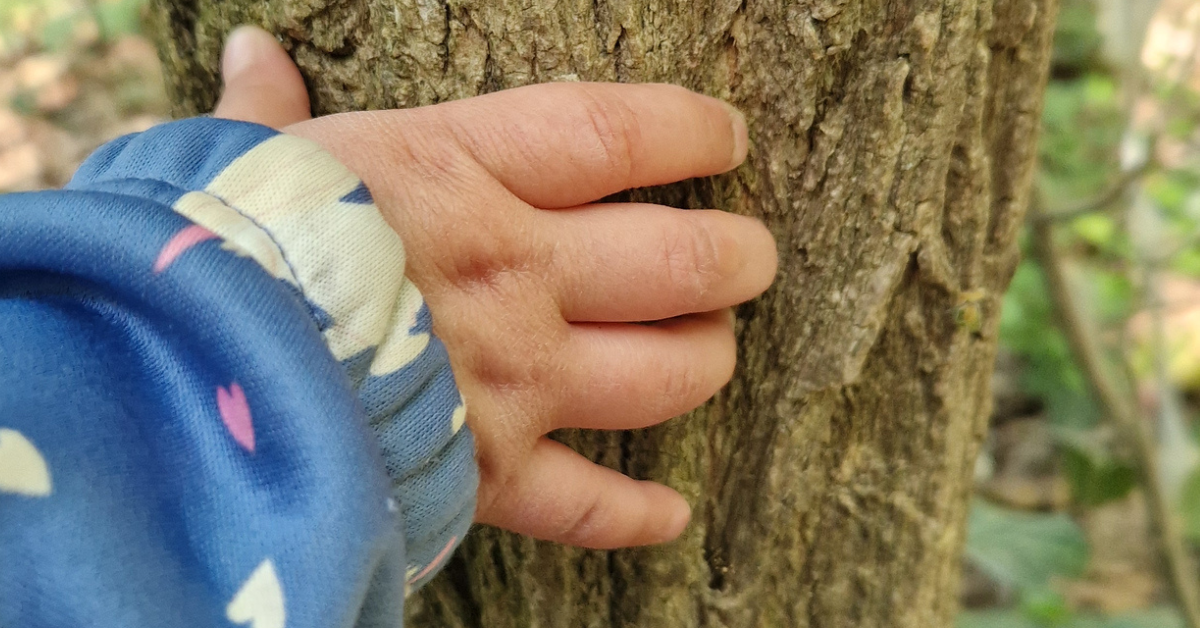
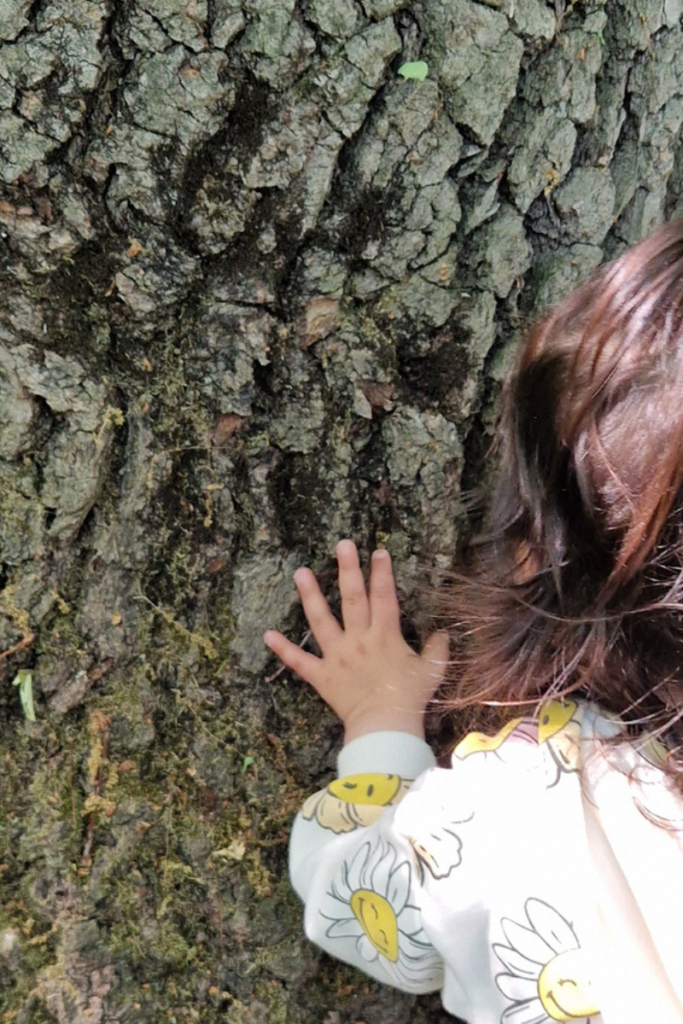
Every time we carried her through the baby home garden, she pointed. Always toward the trees. She did not have words yet, but she had direction, and her direction was always the same: toward the bark, the branches, the rough texture of something she had never touched before.
So we walked her to them. Every single time.
She would run her small fingers along the bark for a long time, slowly, carefully, like she was reading something written there. It was not restlessness. It was the opposite: a deep, focused attention that told us she was getting something from this that she genuinely needed.
Without knowing the phrase at the time, we were already doing toddler sensory activities. We just had not called it that yet. We were following her lead, and her lead was always toward texture, toward touch, toward things that responded under her hands.
Our adoption counselor later confirmed what we were already starting to understand. This kind of tactile exploration, touching natural surfaces, feeling different textures with her hands, was exactly what her developing nervous system was looking for. And the forest, the bark, the leaves, the soil, were providing toddler sensory activities of the richest and most natural kind.
If you want to read more about those early visits and what those weeks looked like for us, you can find the full story in Weeks before she came home: what the getting-to-know-you visits were really like.
What the research says about toddler sensory activities and nature
Here is something worth knowing, especially if you are parenting a child who came from an institutional background, or any child who seems to process the world a little differently.
Research indicates that regular outdoor play promotes active imaginations, lower stress levels, and greater self-respect and empathy among children. It is recommended that infants and toddlers have daily opportunities to experience the outdoors, interacting with living elements such as plants and animals.
From the feel of the grass underfoot to the sound of birds or the wind rustling through trees, nature provides a multi-sensory experience that can help individuals regulate their sensory systems. For children with sensory processing differences, exposure to different textures, sounds, and temperatures can help them learn to manage sensory input and build resilience to overstimulation. You can read more about the research on sensory development and outdoor play here.
Our counselor put it in plain, practical terms: the best toddler sensory activities are often the ones that cost nothing. Bark. Leaves. Soil. Grass. These are not inferior substitutes for a beautifully designed sensory toolkit. In many ways, they are better, because they do not overwhelm a small nervous system the way bright, loud, purpose-built toys can.
Now, this is where some parents might push back. The internet is full of beautifully curated lists of sensory bins, sensory boards, and specialist equipment. And that content is not wrong. Structured toddler sensory activities using purpose-built tools can be genuinely helpful, and if your child’s therapist or pediatrician recommends them, that is worth taking seriously.
But the idea that you need a full set of equipment to support your toddler’s sensory development is worth questioning. The forest has been doing this work for a very long time, free of charge, and without requiring a single trip to a shop.
The first steps in the woods: toddler sensory activities on a forest path
A few months after she came home, our little blossom started walking. And the moment she could take steps independently, we started taking her to the forest near our home.
Not the playground. The forest.
The playground came later, and we will get to that. But the forest first, because the forest was quiet, and she needed quiet.
She walked the paths slowly, stopping constantly. A leaf. A stone. A root pushing up through the soil. She crouched down and examined things with the same careful attention she had given the tree bark back in the baby home garden. She was not in a hurry. She was learning.
These unplanned forest walks turned out to be among the most effective toddler sensory activities we found. The uneven ground challenged her balance. The different surfaces, soil, roots, grass, stone, gave her feet and hands constantly changing input. The sounds of the forest, birds, wind, rustling leaves, introduced her gently to a world of noise without overwhelming her.
We walked behind her, or beside her, and we did not rush her. Stella, our rescue dog, walked with us too, and the three of them, our little blossom, our dog, and the forest floor, had an understanding that seemed to work entirely without us.
Those walks were how Stella and our little blossom slowly became a family. The shared rhythm of them, the quiet, the unhurried attention to small things. It did not happen in one moment. It happened across many mornings in the trees.
If you want to know more about how Stella came into our lives and what she meant to our whole adoption journey, that story starts here: Before the Yes: the part of our story nobody usually talks about].
Grass, soil, and the simplest toddler sensory activities
Once she was steady on her feet, the meadow in the forest became one of her favorite places.
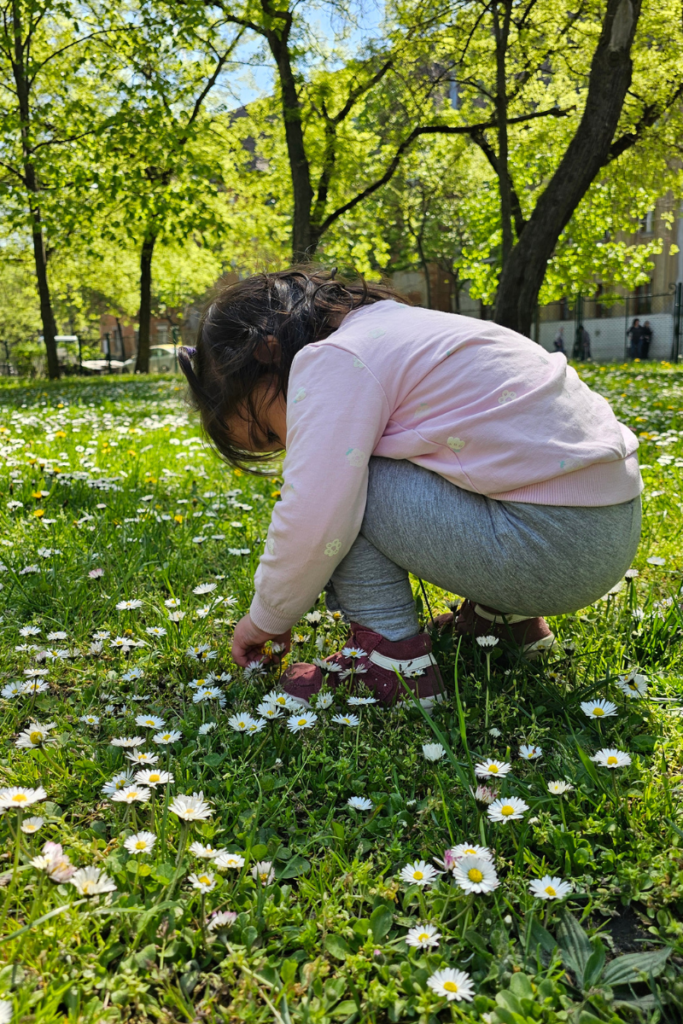
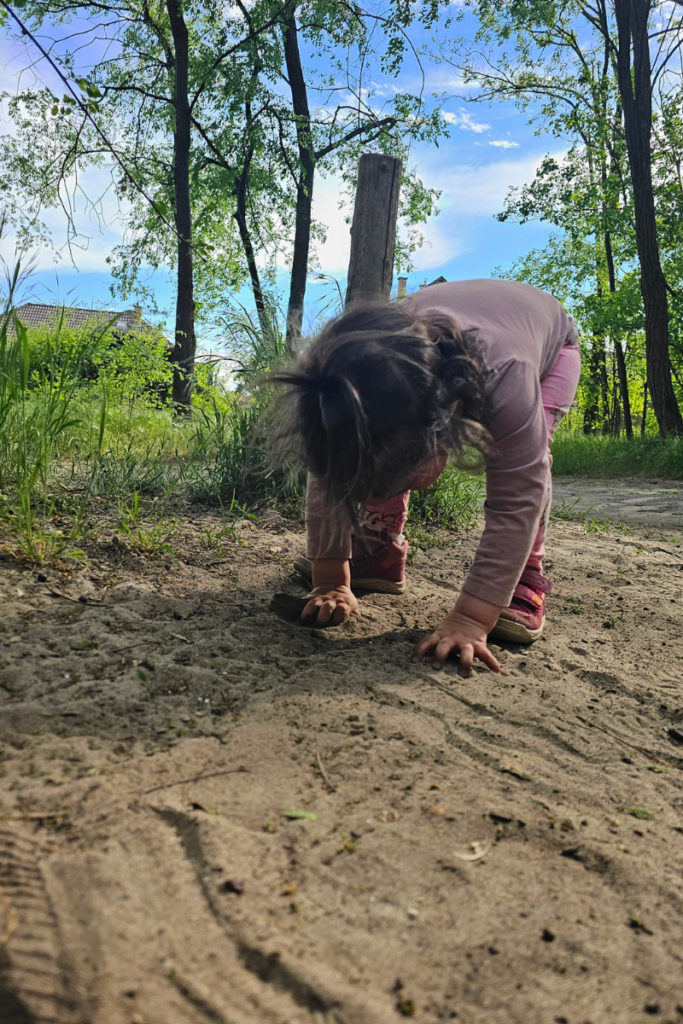
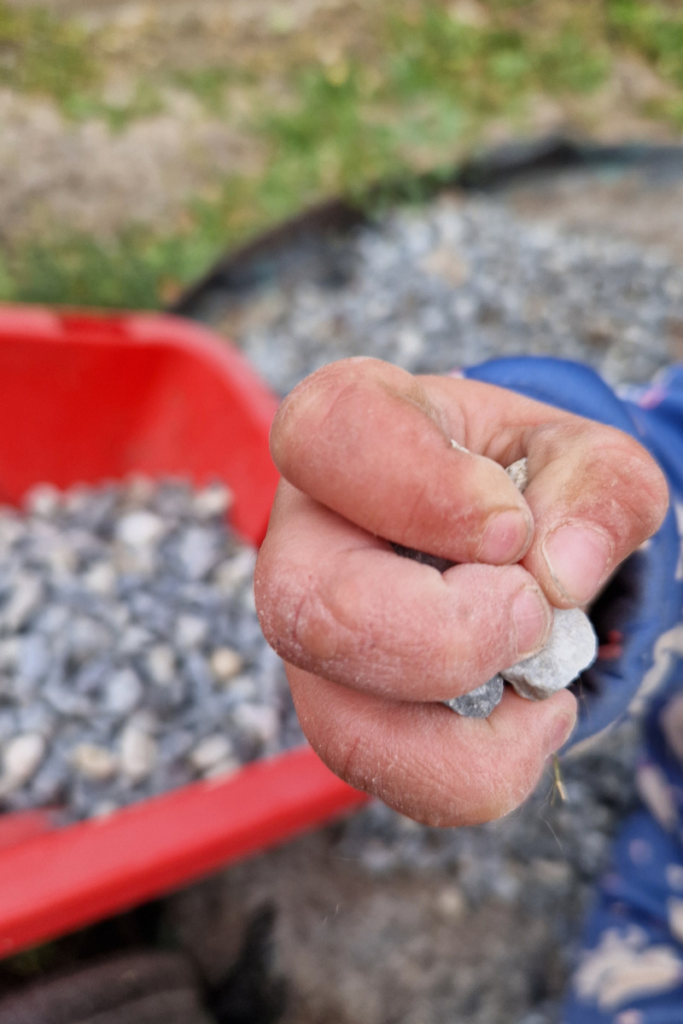
She would lower herself onto the grass with great intention and then spend a long time doing what she had been doing since the beginning: touching everything. Pulling grass with her fingers. Pressing her palm flat against the soil. Picking up a small stone, turning it over, setting it down again.
These are exactly the kinds of toddler sensory activities that support fine motor development and sensory integration. Pulling grass builds hand strength. Pressing into soil gives proprioceptive feedback. Handling small objects develops coordination and focus. None of it required a plan. It was just what she wanted to do, and we let her do it.
She also, on more than one occasion, tried to eat the soil. We did not let her do that part.
What struck us, watching her in those meadow sessions, was how completely absorbed she became. This was not a child being entertained. This was a child working. Processing. Filing away information about a world she was only just beginning to know. The best toddler sensory activities, we were learning, are the ones that look like nothing at all from the outside.
The playground taught us something important
We did take her to the playground. Of course we did. We wanted her to have everything, to see everything, to do everything we had spent years imagining doing together.
What happened surprised us.
She would sit in the swing and simply watch. Not with disinterest, but with a kind of overwhelming focus. She was trying to take it all in: the sounds of other children, the movement around her, the bright colors, the noise. And she was clearly working hard at it.
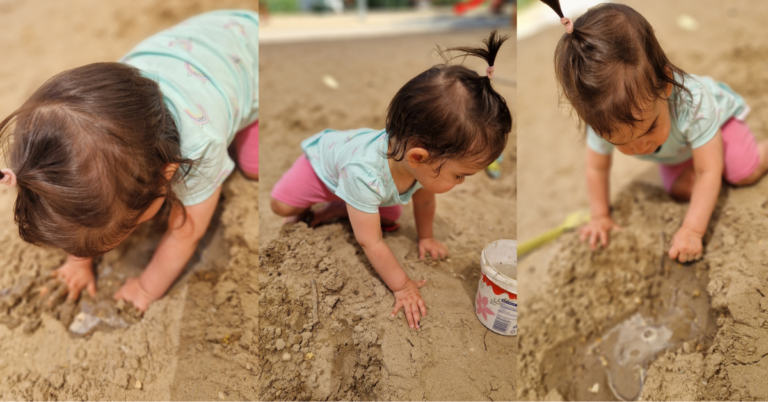
She did not dig in the sandbox the way we had imagined. Instead, she crumbled the sand between her fingers, slowly, the same way she had touched everything else. Sandbox play is often listed among recommended toddler sensory activities, and in her own way she was doing exactly that. Just quietly, and on her own terms.
It became clear, fairly quickly, that the playground was a lot. Not bad, just a lot. Her nervous system, which had spent its first fourteen months in a quiet, contained world, was not yet ready for the full volume of a busy playground. She was not distressed. She was just working harder than she needed to.
So we went back to the forest.
A different kind of toddler sensory activities plan
What we learned, over those months of watching her, is that good toddler sensory activities for our little blossom looked very different from the lists we had read online.
They were quieter. Slower. More repetitive.
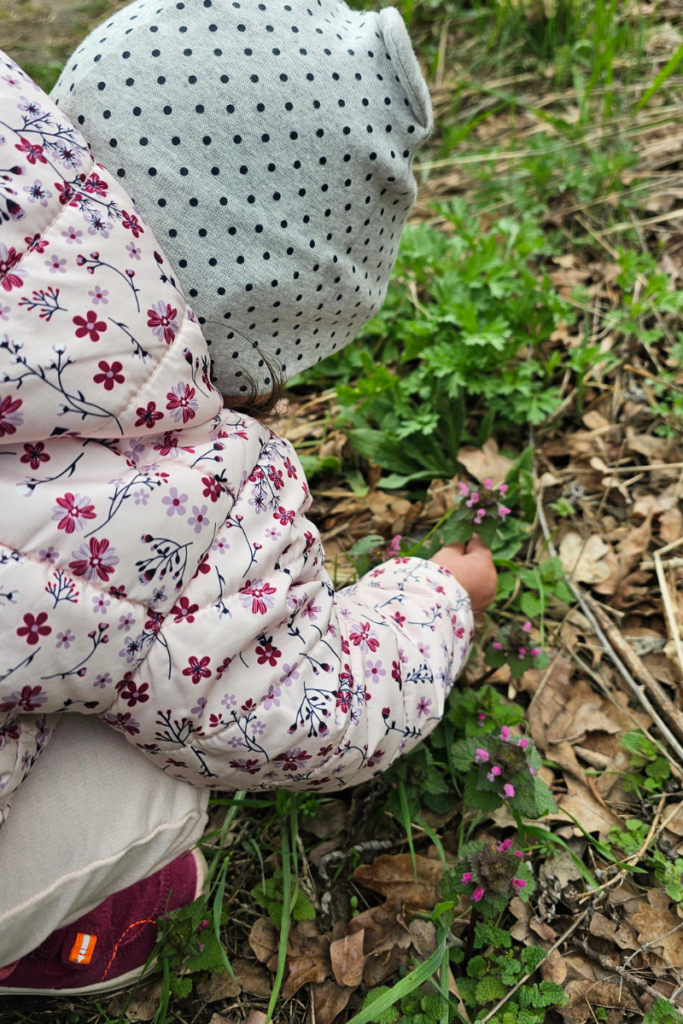
Touching bark. Pulling grass. Running her hands through soil. Walking an uneven forest path where every step asked something small of her balance and her attention. These were the activities that settled her, that let her nervous system find its footing without being pushed past what it could handle.
Studies highlight [here] that limited outdoor play can hinder sensory and motor development, and that providing more outdoor sensory experiences helps promote healthier childhood development. For us, that research simply confirmed what we were already seeing: that the most effective toddler sensory activities we had found were free, outdoors, and entirely child-led.
Our adoption counselor’s advice was simple and stuck with us: go to the forest often, let her touch things, and do not worry about doing it the right way. There is no right way. There is only paying attention to your child and following where she leads.
What nobody tells you about introducing the world slowly
Here is the honest part.
We had so many plans. So many things we wanted to show her, so many experiences we had imagined sharing. We had waited years for this. We wanted to give her everything at once.
And we had to let that go.
Not because she was damaged or delayed. But because she was a person with a history, and that history had shaped how she received the world. She had arrived with needs we had not expected, and those needs were pointing us in a direction we had not planned to go.
The forest instead of the playground. Quiet mornings instead of busy afternoons. Simple, nature-based toddler sensory activities instead of structured sessions with specialist equipment.
That recalibration was not a loss. It was, in the end, one of the best things that happened to us as a family. Because it forced us to slow down too. To sit in the grass with her. To watch her examine a leaf for four uninterrupted minutes. To understand, for the first time, that this was the kind of parenting she needed from us, and that it turned out to be the kind we had always wanted to do.
If you want to read more about what the adoption process itself looked like from the inside, that part of the story is here: We said YES: how we started the adoption application.
And the day she came home, and what those first hours actually looked like, is here: The first 24 hours: what adoption day was really like.
What comes next
Our little blossom is still drawn to trees. Every walk, every forest, every park, she still reaches for the bark first.
And that same instinct has followed her indoors too. Of all the toys she has been given, the ones she comes back to again and again are the ones she can do something with. Toys she can squeeze, stack, pull apart, shake, or smear. Things that respond when she touches them. Things that give her hands something real to do.
And then there is the music. She has always been drawn to anything that makes sound, but what surprises us still is what happens when a rhythm starts. She does not just listen. She moves. Her whole body answers it, instinctively, joyfully, as if the beat is something she already knew. For a child who spent her first months in a quiet, contained world, that rhythm feels like something that was always hers, just waiting to find her.
It turns out the forest taught her something that stayed. That the world is meant to be handled, not just looked at.
We are still learning what that means for how we play together at home. That part of the story is coming next.
FAQ — Nature play and sensory development
What are the best toddler sensory activities for children from institutional backgrounds?
Nature-based activities tend to work best: touching bark and leaves, walking on uneven forest paths, playing in soil or sand, and spending time around animals. These provide rich sensory input without overstimulating a nervous system that may not be used to high-volume environments. Start slowly and follow your child’s lead.
Do I need sensory toys for toddler sensory activities?
Sensory toys can be helpful, and if a therapist recommends them, that is worth taking seriously. But they are not essential. The natural world provides an extraordinary range of textures, sounds, temperatures, and movements that support sensory development just as effectively, and often more gently, than purpose-built equipment.
What are the signs that my toddler is overstimulated?
Common signs include zoning out, becoming very still and quiet, getting fussy or tearful without an obvious cause, or simply stopping and refusing to engage. For our little blossom, overstimulation looked different: she would become increasingly uncontrollable, bouncing from one thing to the next without settling, and on harder days, she would start screaming.
How often should toddlers do outdoor sensory activities?
Daily, if possible. Even short outings, a walk around the block, ten minutes in a garden, make a difference over time. For children with sensory sensitivities, regular low-stimulation outdoor time is often more beneficial than occasional bigger outings.
Can a first time mom manage sensory-sensitive toddler activities without professional help?
Yes, and more often than you might think. The most important skill is observation: watching what your child reaches for, what calms them, what overwhelms them, and adjusting from there. Professional support is always worth seeking if you have concerns, but a parent who pays close attention is already doing the most important work.