The day she came home
This is Part 6 of a 6-part series: Our Adoption Journey – From Hope to Home. If you’re just joining us, you can read [Part 1 here], [Part 2 here], [Part 3 here], [Part 4 here], and [Part 5 here].
There are endings that feel like beginnings.
This is one of them. The final chapter of our adoption journey.
The intensive week: our adoption journey reaches its final countdown
The getting-to-know-you visits were behind us. What came next was called the intensive week — the final, daily countdown before our little blossom would leave the baby home for good.
Every morning that week, we arrived at the baby home, collected her, and spent the day together. Every evening, we brought her back. Each day, the tether between her and that place stretched a little further — and the tether between her and us grew a little stronger.
Monday: we brought her home for the first time. She was going to nap in her room — the room we had painted by lamplight, assembled by hand, staged for a photograph and then finished properly because she deserved nothing less.
We laid her down. And then the neighbours began drilling.
Not one air conditioning unit. Two. Simultaneously. Through concrete walls.
My husband and I stood in the hallway, barely breathing, convinced the nap was over before it had begun. But our little blossom, who had spent fourteen months sleeping through the sounds of a busy baby home, simply closed her eyes.
She slept for two hours.
We sat on the sofa and didn’t move. We were afraid that even the sound of our breathing might wake her.
Tuesday: she stayed until after her afternoon snack. Wednesday: a free day — one last exhale before the final stretch. Thursday: she stayed for dinner, sitting in her high chair at our table as if she had always been there.
And on Friday — she came home.
The morning of the last day
We had been building toward this day for weeks, the day our adoption journey had been moving toward from the very beginning. And yet, when it arrived, I didn’t know what to do with myself.
I had imagined it many times. I had imagined it would feel enormous — ceremonial, overwhelming, cinematic. I had imagined I would know exactly what to say, exactly what to feel.
What I actually felt, driving to the baby home that morning, was a strange, suspended quietness. Like the moment before a wave breaks.
We parked. We walked in. We said good morning to the caregivers who had looked after our little blossom for fourteen months — the women who had fed her, held her, watched her grow from a newborn into the curious, bright-eyed toddler sitting on a play mat when we first saw her.
I didn’t have the words to thank them properly. I’m not sure those words exist.
A bag that held a life
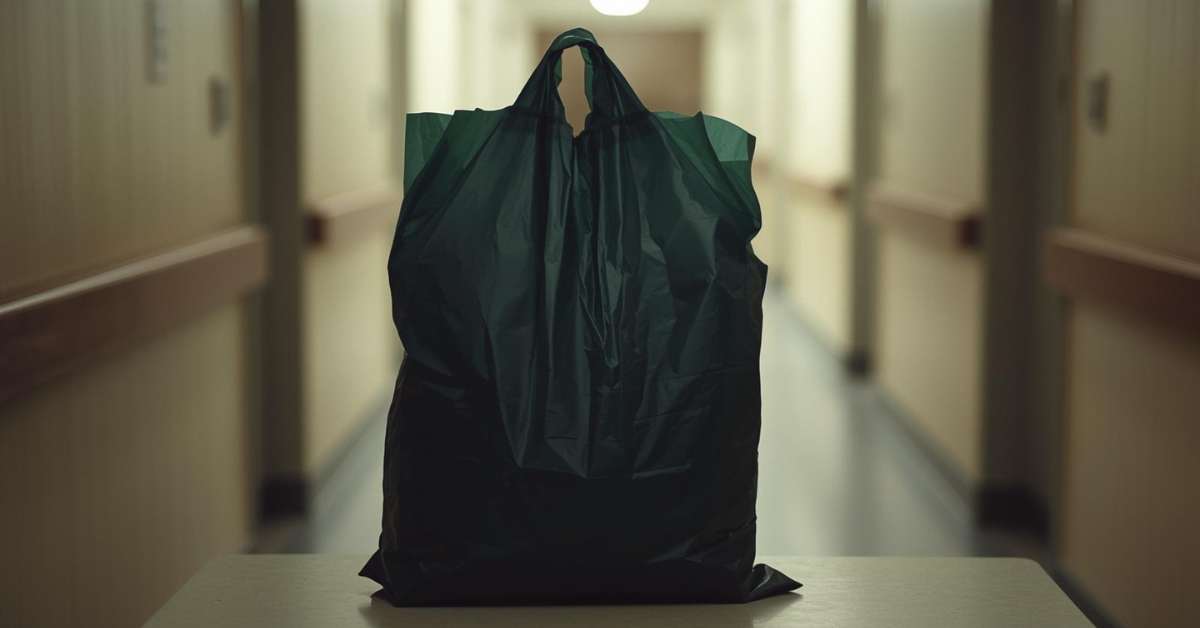
Before we left, the caregivers handed us a bag.
One single carrier bag.
Inside: her medical documents. Her official papers. A small pillow she had been given at Christmas. A little crocheted dummy clip. Her favourite soft cloth — her comfort object, worn soft from months of being held. And a small photo album, put together by the caregivers with quiet thoughtfulness, so that we would have pictures of her from her very earliest days — the days before we knew her, the days we would never be able to give back to her but could at least hold in our hands.
That was everything. One bag. Fourteen months of a life.
I held it on my lap in the car and couldn’t speak.
Going home
This was the moment our adoption journey quietly shifted from waiting to living. We buckled her into her new car seat.
She looked out of the window with those serious brown eyes, taking in the city moving past her — the streets, the trees, the light. Everything still so new. Everything still a discovery.
My husband drove. I sat in the back beside her.
Nobody said very much.
There are moments that don’t need words. Moments that are complete in themselves — full to the edges, needing nothing added. This was one of them.
We turned onto our street. We parked. We carried her up the stairs.
And Stella was waiting by the door.
Stella and our little blossom: first meeting
Stella was waiting by the door when we walked in.
She trotted over immediately, nose working overtime, circling our little blossom with focused curiosity. She sniffed. She looked up at us. She looked back at her.
She was interested — genuinely, eagerly interested. But she didn’t quite understand yet that this small person was here to stay.
That story — Stella and our little blossom, and whatever their relationship will become — is one I’ll be sharing in the Adoption Journey section of this blog. It is still unfolding. And I have a feeling it will be worth the wait.
The room that was ready: preparing for the next step in our adoption journey
We carried our little blossom into her room.
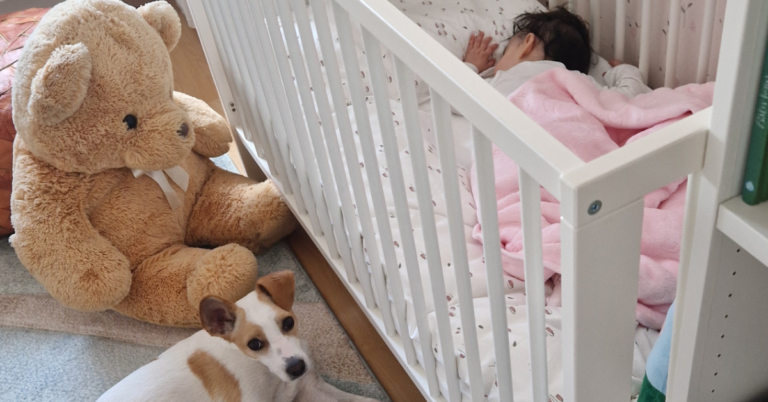
The walls were painted. The furniture was assembled. The cot was made up with soft sheets. On the shelf, the small photo album from the baby home sat beside the first books we had chosen for her.
She looked around the room slowly, taking it all in — the colours, the light, the space that was entirely, completely hers.
She had never had a room of her own before.
I stood in the doorway and watched her discover it, and I thought about all the evenings we had spent painting those walls by lamplight. All the weekends of furniture assembly and reorganised workstations and staged photographs and deadline panic. All of it had led to this — to her, standing in the middle of her room, looking up at us with those brown eyes.
It was worth every single moment.
What this journey taught us
Our adoption journey began with loss. And then, after all of it, our adoption journey brought us here.
It began with years of hoping and trying and grieving. It began with two failed pregnancies and a diagnosis and a long, slow process of letting go of one version of our future and opening our hands to another.
It continued through paperwork and waiting rooms and a psychological assessment that asked us to look honestly at ourselves. Through a preparation course that dismantled our romantic notions and replaced them with something more real and more valuable. Through months of living fully — travelling, running, loving — while we waited for a phone call we didn’t know when would come.
And then it came.
A little girl. Thirteen months old. Sitting on a play mat. Looking straight at us.
She smiled.
Our adoption journey taught us that family is not something that happens to you. It is something you choose — again and again, through the fear and the paperwork and the difficult weekends and the nights of painting walls by lamplight. You choose it when it is easy and when it is terrifying. You choose it when you don’t know the outcome and when the uncertainty feels unbearable.
And one day, if you keep choosing, you find yourself standing in the doorway of a small painted room, watching your daughter discover her own space for the very first time.
That is what we found at the end of our adoption journey.
Or rather — at the beginning of it.
The journey continues
From Hope to Home — that was the promise of this series. And we kept it.
But the truth is, the day our little blossom came home was not the end of the story. It was the first page of a completely different one.
The questions that came next — about bonding, about attachment, about how to help a child who has known only institutional life learn to trust, to rest, to feel safe — those are the questions we are still living with, learning from, and growing through every single day.
And they are the questions I’ll be exploring here, on WithLexa.com, in the weeks and months ahead.
If our story has resonated with you — if you are somewhere on your own adoption journey, or considering it, or simply curious about what this life looks like from the inside — I hope you’ll stay.
The adoption journey continues — and like every adoption journey, it unfolds in ways you can never fully prepare for.
Start from the beginning with [Part 1: Before the Yes].
FAQ — The final steps of the Hungarian adoption process
What is the intensive week in Hungarian adoption?
The intensive week is the final stage of the getting-to-know-you period, immediately before the child comes home permanently. Each day, the child spends progressively more time with the adoptive family — from a single nap on the first day to staying for dinner by Thursday — before moving home on Friday. The structure helps the child transition gradually rather than making an abrupt change.
What happens on the day an adopted child comes home in Hungary?
On the day of the permanent placement, the adoptive parents collect the child from the baby home or foster placement. The child’s belongings — documents, personal items, comfort objects — are handed over. From that moment, the child is in the full-time care of the adoptive family, though the legal adoption finalization process continues afterward.
How much does an adopted child bring with them when they leave a baby home?
In our experience, very little. Our little blossom left with a single carrier bag containing her medical and legal documents, a pillow, a comfort cloth, a crocheted dummy clip, and a small photo album made by her caregivers. The simplicity of that bag was one of the most quietly devastating moments of our entire adoption journey.
What comes after the child comes home in Hungarian adoption?
After this stage of the adoption journey, there is a 30-day period during which the placement can still be reconsidered if serious concerns arise. If everything is going well after those 30 days, the adoption moves toward legal finalization through the courts. In the meantime, the child protection services monitor the child’s adjustment and wellbeing — and the real work of bonding, attachment, and building a family begins.
What is the hardest part of adoption after the child comes home?
Every family’s experience is different. For many adoptive parents, the early weeks bring unexpected challenges — particularly around attachment and trust, especially for children who have come from institutional care. The child may have learned to self-soothe, to not ask for comfort, to manage alone. Learning to need someone — and to trust that someone will stay — takes time, patience, and a great deal of love.
If you’d like to understand more about how attachment develops in adopted children, the Attachment Project offers a clear and compassionate guide to adoption and attachment theory. For practical tips on building that bond day by day, this resource from Nightlight is one of the most actionable we’ve come across.